


Contents
- 1 Harnessing Your Body’s Natural Healing Power for Younger-Looking Skin
- 2 What Is PRP?
- 3 How Does The Body’s Natural Healing Process Work?
- 4 Why Is PRP Called a “Biological Matrix”?
- 5 Key Benefits Of PRP For Skin Rejuvenation
- 6 Who Is A Good Candidate For PRP?
- 7 The PRP Treatment Process
- 8 Frequently Asked Questions
- 9 Rejuvenate Your Skin Naturally With PRP
Harnessing Your Body’s Natural Healing Power for Younger-Looking Skin
In the world of aesthetic medicine, many skin rejuvenation treatments focus on external technologies such as lasers, HIFU, or injectable products. PRP (Platelet-Rich Plasma), however, stands out because it utilizes the body’s own regenerative capabilities to restore and rejuvenate the skin naturally.
Because PRP is derived from the patient’s own blood, it is considered one of the safest and most biocompatible regenerative treatments available today. By stimulating collagen production and tissue repair from within, PRP helps improve skin quality without surgery or synthetic fillers.
So, what exactly is PRP, and why do experts refer to it as a “biological matrix” for skin rejuvenation?
What Is PRP?
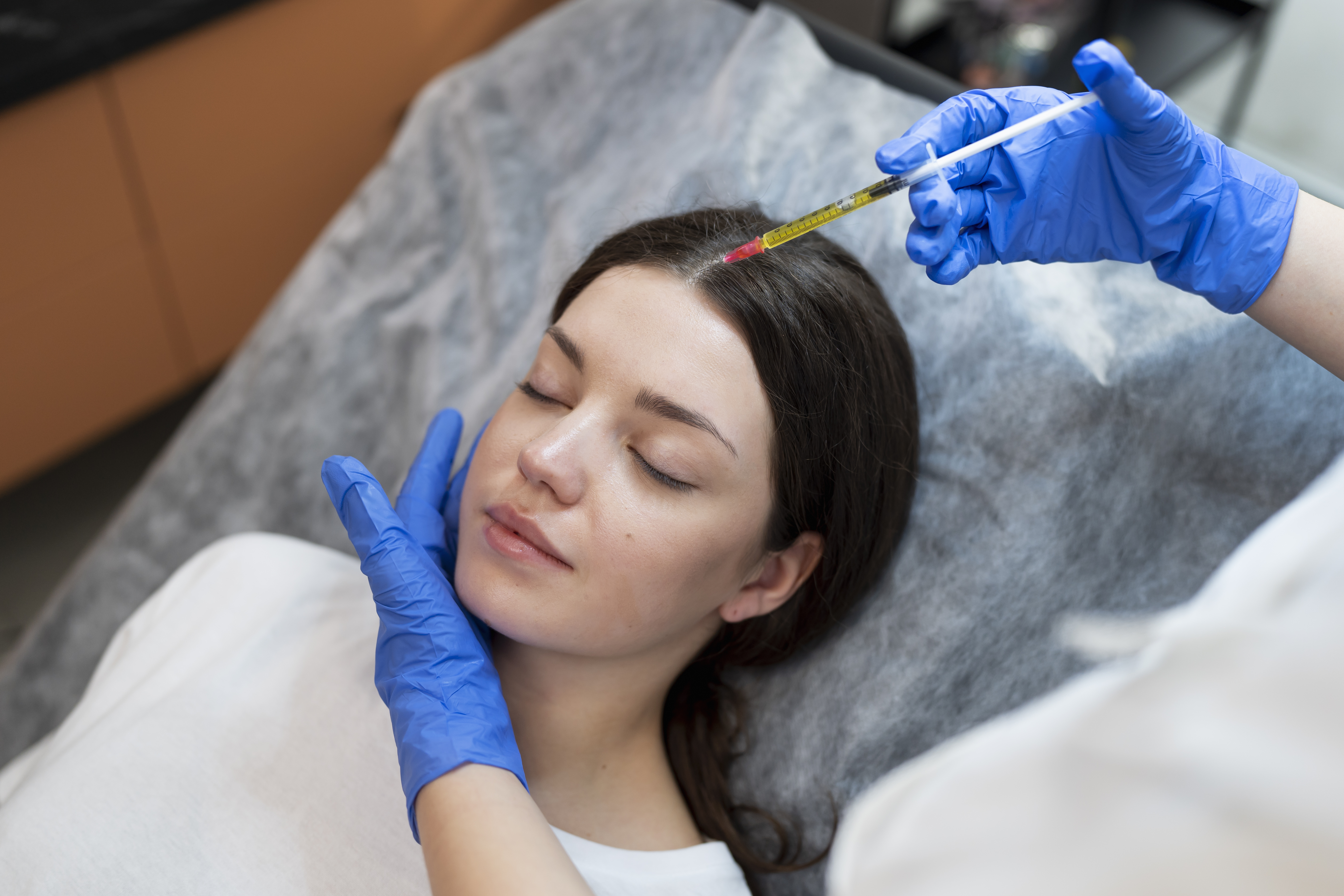
PRP (Platelet-Rich Plasma) is a concentrated plasma solution obtained from a patient’s own blood. It contains a platelet concentration several times higher than normal blood levels.
After a small blood sample is collected, it is processed using a specialized centrifuge system to separate and concentrate the platelets. The resulting PRP is then used for aesthetic and regenerative treatments.
PRP contains:
- Growth factors
- Cytokines
- Regenerative proteins
- Bioactive molecules that promote tissue repair
Because of its regenerative properties, PRP is widely used for:
- Skin rejuvenation
- Acne scar treatment
- Post-laser recovery
- Hair restoration
- Regenerative medicine applications
How Does The Body’s Natural Healing Process Work?
The effectiveness of PRP lies in its ability to activate the body’s natural tissue repair mechanisms.
Stage 1: Signaling Tissue Injury
Whenever tissue damage occurs—or controlled micro-injuries are created through treatments such as:
- Microneedling
- Fractional Laser
- RF Microneedling
- PRP Injection
Platelets immediately migrate to the affected area.
These platelets act as biological messengers that initiate the healing process.
Stage 2: Release Of Growth Factors
Once activated, platelets release powerful growth factors, including:
- PDGF (Platelet-Derived Growth Factor)
- VEGF (Vascular Endothelial Growth Factor)
- TGF-β (Transforming Growth Factor Beta)
- EGF (Epidermal Growth Factor)
These growth factors help:
- Stimulate stem cells
- Activate fibroblasts
- Promote new blood vessel formation
- Increase collagen and elastin production
Stage 3: Tissue Regeneration
After receiving regenerative signals, the body begins:
- Repairing damaged tissue
- Producing new collagen
- Restoring skin structure
- Improving elasticity and firmness
As a result, the skin becomes:
- Smoother
- Firmer
- More radiant
- More youthful-looking
Why Is PRP Called a “Biological Matrix”?
This is one of the most fascinating aspects of PRP therapy.
When PRP is activated, platelets not only release growth factors but also form a specialized three-dimensional structure known as a:
Fibrin Matrix
The fibrin matrix functions as a temporary biological scaffold that supports tissue regeneration.
Its roles include:
- Providing structural support
- Holding regenerative cells in place
- Retaining growth factors within the treatment area
- Facilitating cellular communication
Because growth factors remain active longer within this framework, the regenerative process becomes more efficient and sustained.
This is why many regenerative medicine experts refer to PRP as a “Biological Matrix”—a living framework that supports the skin’s natural rebuilding process.
Key Benefits Of PRP For Skin Rejuvenation
Improved Skin Firmness And Elasticity
PRP stimulates collagen and elastin production, helping the skin appear:
- Firmer
- More youthful
- Better hydrated
Reduction Of Enlarged Pores
As collagen density improves, pore appearance becomes less noticeable and skin texture appears smoother.
Acne Scar Improvement
PRP is commonly combined with:
- Fractional CO2 Laser
- RF Microneedling
- Medical Microneedling
To:
- Improve acne scars
- Promote tissue remodeling
- Enhance skin texture
Reduction Of Post-Acne Marks
Growth factors accelerate skin renewal and help fade:
- Post-inflammatory hyperpigmentation
- Acne marks
- Uneven skin tone
Repair Of Damaged Skin
PRP is especially beneficial for:
- Sensitive skin
- Thin or weakened skin
- Skin damaged by harsh treatments
- Post-procedure recovery
Who Is A Good Candidate For PRP?
PRP may be suitable for individuals who:
- Have early signs of aging
- Want natural skin rejuvenation
- Have acne scars
- Need skin recovery after laser treatments
- Want to improve overall skin quality
- Prefer autologous regenerative treatments
The PRP Treatment Process
Step 1: Medical Consultation
A skin assessment is performed to determine suitability for treatment.
Step 2: Blood Collection
A small amount of blood is drawn, similar to a routine laboratory test.
Step 3: PRP Preparation
The blood sample is processed through centrifugation to isolate platelet-rich plasma.
Step 4: PRP Application
PRP may be delivered through:
- Microinjections
- Mesotherapy
- Microneedling
- Combination treatments with lasers
Step 5: Recovery And Regeneration
The skin continues to regenerate over the following weeks and months as collagen production increases.
Frequently Asked Questions
Is PRP safe?
Yes. Since PRP is derived from the patient’s own blood, the risk of allergic reactions or rejection is extremely low when performed correctly.
When will I see results?
Most patients begin noticing improvements within 2–4 weeks, with continued enhancement over several months.
Can PRP completely eliminate acne scars?
Results vary depending on scar severity. PRP is often combined with other treatments for optimal outcomes.
Is PRP painful?
Most patients experience only mild discomfort, as topical anesthetic is typically applied beforehand.
How many PRP sessions are recommended?
A series of 3–5 sessions is commonly recommended, depending on individual goals and skin conditions.
Rejuvenate Your Skin Naturally With PRP
PRP is more than a cosmetic treatment—it is a powerful application of regenerative medicine that leverages your body’s own healing potential. Through growth factors and the formation of a fibrin biological matrix, PRP helps rebuild skin from within, promoting healthier, stronger, and more youthful-looking skin.
If you are seeking a natural solution for skin rejuvenation, acne scar improvement, or tissue repair without relying heavily on synthetic products or invasive procedures, PRP may be an excellent option under professional medical supervision.
Book A Consultation
At Oceania Spa & Clinic Ba Son (Ho Chi Minh), our specialists provide comprehensive skin assessments and personalized PRP treatment plans tailored to your unique needs.
Schedule a consultation today to discover whether PRP is the right regenerative solution for your skin goals.