


Many people think acne treatment simply means “extracting the pimples.” In reality, acne is a dermatological condition related to sebaceous gland activity, bacteria, clogged pores, inflammation, hormones, skincare habits, and individual skin characteristics.
That is why using manual pressure to squeeze pimples without identifying the correct acne type, controlling inflammation, or restoring the skin afterward can easily lead to a repeated cycle: acne returns after extraction, dark marks last longer, the skin becomes weaker, and the risk of acne scarring increases.
This is exactly why medical-grade acne treatment at Oceania Spa & Clinic Ba Son is significantly different from regular spa pimple extraction. Here, acne care does not stop at removing comedones. It is a professional treatment process involving skin examination, skin analysis, personalized protocols, sterile extraction techniques, and advanced technology to support recovery.
Contents
- 1 What Is Medical-Grade Acne Treatment?
- 2 Why Can Regular Spa Pimple Extraction Lead to Dark Marks and Scarring?
- 3 Difference 1: Dermatologist-Led Examination and Personalized Protocol
- 4 Difference 2: Not Every Pimple Should Be Extracted
- 5 Difference 3: Acne Extraction in a Sterile Environment
- 6 Difference 4: Advanced Technology to Support Inflammation Reduction and Skin Recovery
- 7 Difference 5: Acne Treatment Combined with Post-Acne Mark and Scar Prevention
- 8 Comparison Table: Acne Treatment at Oceania Ba Son vs. Regular Spas
- 9 Who Should Consider Medical-Grade Acne Treatment at Oceania Ba Son?
- 10 Medical-Grade Acne Treatment Process at Oceania Ba Son
- 11 How to Care for Your Skin After Medical Acne Extraction
- 12 SEO FAQ
- 12.1 Does medical-grade acne treatment require acne extraction?
- 12.2 Is regular spa pimple extraction risky?
- 12.3 Should inflammatory acne be extracted?
- 12.4 Is acne treatment at Oceania Ba Son suitable for sensitive skin?
- 12.5 How long does redness last after acne treatment?
- 12.6 Can acne and post-acne marks be treated at the same time?
- 13 CTA: Do Not Let Incorrect Acne Extraction Cause Long-Term Marks and Scarring
What Is Medical-Grade Acne Treatment?
Medical-grade acne treatment approaches acne as a dermatological concern that needs to be assessed based on its cause, severity, and stage.
Instead of simply looking at the skin and extracting every visible lesion, a medical acne treatment process usually includes:
- Skin analysis and acne assessment
- Classification of acne: closed comedones, blackheads, inflammatory acne, pustules, cystic acne
- Evaluation of the skin condition: oily skin, sensitive skin, weakened skin, corticosteroid-damaged skin, post-acne hyperpigmentation-prone skin
- Assessment of risks such as post-acne marks, scarring, and inflammation
- Properly indicated acne extraction
- Combination with topical medication, oral medication, or advanced technology when necessary
- Monitoring progress throughout the treatment journey
In other words, medical-grade acne treatment does not only address what is visible on the skin’s surface. It focuses on controlling the root causes of acne and preventing post-acne complications.
Why Can Regular Spa Pimple Extraction Lead to Dark Marks and Scarring?
Not every spa performs acne extraction incorrectly. However, many places still use a manual approach: visually checking the skin, pressing pimples by hand or with an extractor tool, forcing out immature comedones, or squeezing inflamed acne that is still swollen and red.
This method can cause several problems:
- Rupturing the inflammatory lesion underneath the skin
- Spreading bacteria to surrounding healthy areas
- Increasing redness and swelling after extraction
- Slowing down the healing process
- Causing red or brown post-acne marks
- Increasing the risk of depressed scars if the skin is deeply damaged
- Making the skin more sensitive and fragile after repeated extractions
This is especially important for inflammatory acne, pustules, and cystic acne. If they are extracted at the wrong time, inflammation may worsen. This is why some people experience rougher skin, persistent dark marks, and more visible pores after repeated pimple extraction.
Difference 1: Dermatologist-Led Examination and Personalized Protocol
Regular Spas
At many regular spas, clients are often assessed by technicians using visual observation, then recommended a standard extraction or facial care package.
The issue is that not all acne types should be treated the same way. Closed comedones, blackheads, inflammatory acne, pustules, and cystic acne each require a different treatment approach. A one-size-fits-all protocol often leads to inconsistent results.
Oceania Ba Son
At Oceania Spa & Clinic Ba Son, clients undergo consultation and skin analysis before a treatment plan is created. The doctor evaluates the acne condition based on:
- Type of acne
- Level of inflammation
- Sebum production
- Degree of pore congestion
- Risk of post-inflammatory hyperpigmentation
- Risk of acne scarring
- Previous treatment history
- Current at-home skincare products
After the assessment, the doctor designs a suitable treatment protocol. Some cases may only require cleansing, acne extraction, and skin recovery. More severe inflammatory acne cases may need topical medication, oral medication, or technology-assisted treatment when indicated.
The key difference is that clients are not placed into a generic treatment routine. Instead, the treatment is tailored to the actual condition of their skin.
Difference 2: Not Every Pimple Should Be Extracted
One of the most common mistakes in acne extraction is trying to remove every lesion on the face. While this may sound like a way to “clear the skin,” it can actually cause deeper skin damage.
Regular Spas
Some places may extract immature comedones, inflamed acne, pustules, or cystic acne that is still swollen and painful. When excessive force is applied, the inflammatory lesion may rupture beneath the skin, causing prolonged redness and a higher risk of dark marks or scarring.
Oceania Ba Son
In medical-grade acne treatment, the doctor or trained technician carefully determines:
- Which comedones can be extracted
- Which lesions need to be calmed first
- Which pimples should not be squeezed
- Which acne lesions require medication or technology-assisted treatment
- Which skin areas should not be aggressively manipulated
In general, extraction should only be performed on suitable lesions, especially non-inflammatory acne such as blackheads, whiteheads, or certain closed comedones that have been properly prepared.
This is a major difference that helps reduce tissue damage and minimize the risk of post-acne marks and scarring.
Difference 3: Acne Extraction in a Sterile Environment
Regular Spas
If tools are not properly sterilized or hygiene standards are not followed, the skin may be exposed to cross-contamination. This is especially risky for acne-prone skin with inflammation or a weakened skin barrier.
In addition, applying too much manual pressure can cause bruising, prolonged redness, scratches, or deeper tissue trauma.
Oceania Ba Son
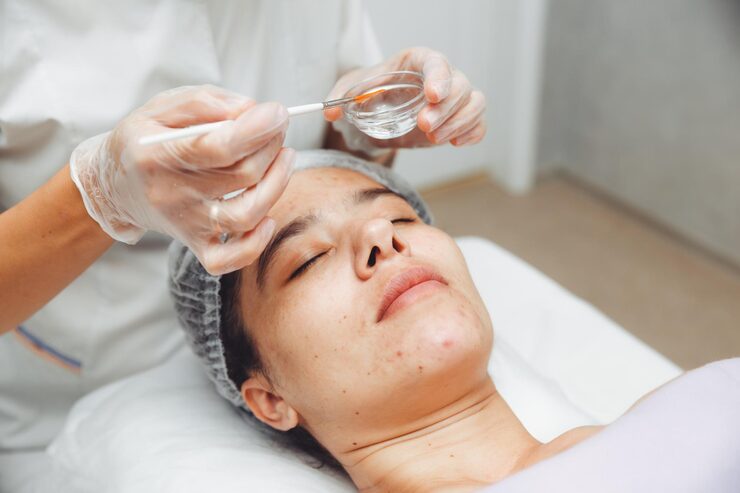
At Oceania Ba Son, acne extraction is performed with a focus on hygiene control and minimizing skin damage. The process usually emphasizes:
- Cleansing the skin before extraction
- Disinfecting the treatment area
- Using professional extraction tools
- Applying gentle and appropriate pressure
- Avoiding forced extraction of unsuitable lesions
- Calming and restoring the skin afterward
The goal is not only to remove acne contents from the skin, but also to reduce the risk of inflammation spreading and support better post-treatment recovery.
Difference 4: Advanced Technology to Support Inflammation Reduction and Skin Recovery
This is one of the biggest differences between medical-grade acne treatment and simple pimple extraction.
Regular Spas
After extraction, many regular spas only apply a soothing mask or basic skincare product. This may temporarily make the skin feel more comfortable, but it does not effectively address deeper inflammation, bacteria within follicles, or the risk of post-inflammatory hyperpigmentation.
Oceania Ba Son
Depending on the skin condition, the doctor may combine advanced technologies such as:
- LED light therapy
- High-frequency treatment
- Diode Laser
- IPL
- Skin-soothing and recovery technologies
- Recovery-focused infusion therapy when appropriate
These technologies are used with the aim of:
- Supporting skin calming after extraction
- Reducing redness and swelling
- Helping control acne-causing bacteria
- Promoting the healing process
- Reducing the risk of post-inflammatory dark marks
- Supporting healthier skin recovery
For skin that is prone to dark marks, redness, or active inflammation, the recovery step after extraction is extremely important.
Difference 5: Acne Treatment Combined with Post-Acne Mark and Scar Prevention
Many people clear their acne only to face another problem afterward: red marks, brown marks, depressed scars, enlarged pores, and uneven skin texture. This often happens when inflammatory acne is not controlled early or when extraction is performed incorrectly.
Regular Spas
The main goal is usually to clear the acne contents during that session. After extraction, clients go home and manage their skincare on their own. If the skin develops dark marks, redness, or recurring acne, they return for another extraction session.
Oceania Ba Son
The acne treatment protocol at Oceania Ba Son focuses on three key goals:
- Reducing current acne
- Minimizing acne recurrence
- Preventing post-acne marks and scarring
The doctor may guide clients on at-home skincare, suitable product selection, lifestyle adjustments, and how to monitor skin reactions through each stage.
This is important because acne cannot improve sustainably if treatment is only performed at the clinic while the at-home routine remains unsuitable.
Comparison Table: Acne Treatment at Oceania Ba Son vs. Regular Spas
| Criteria | Regular Spas | Oceania Ba Son |
| Skin assessment | Technician observes visually | Doctor or dermatology specialist performs skin analysis and consultation |
| Treatment protocol | General routine for many clients | Personalized according to acne type and skin condition |
| Acne extraction | May involve strong pressure and extraction of unsuitable lesions | Only suitable lesions are treated with gentle, controlled techniques |
| Hygiene | Depends on each facility | Focus on specialized tools and hygiene control |
| Supportive technology | Usually limited to soothing masks | May combine LED therapy, high-frequency treatment, Diode Laser, or IPL |
| Inflammation control | Limited | Includes inflammation reduction, soothing, and recovery protocols |
| Post-acne mark and scar prevention | Not always the main focus | Focuses on minimizing dark marks, scarring, and restoring the skin barrier |
| Follow-up | Usually limited | Progress is monitored and the protocol can be adjusted when needed |
Who Should Consider Medical-Grade Acne Treatment at Oceania Ba Son?
You should consider medical-grade acne treatment if you are experiencing:
- Recurring inflammatory acne
- Many closed comedones and rough, congested skin
- Pustules, cystic acne, or painful acne
- Skin that easily develops dark marks after acne
- Repeated extraction sessions with little improvement
- Weak, sensitive, or redness-prone skin
- Enlarged pores and uneven skin texture
- High risk of acne scarring
- Skin irritation after using multiple acne products
In particular, if you have inflammatory acne, cystic acne, or acne lasting for several months, you should not rely only on repeated extraction. Your skin needs proper diagnosis and inflammation control.
Medical-Grade Acne Treatment Process at Oceania Ba Son
Step 1: Consultation and Skin Analysis
The doctor examines the skin condition, acne type, inflammation level, sensitivity, and risk of post-acne marks or scarring.
Step 2: Cleansing and Skin Preparation
The skin is cleansed, disinfected, and prepared before professional treatment begins.
Step 3: Properly Indicated Acne Extraction
Only suitable comedones are extracted using professional tools and gentle techniques to minimize trauma.
Step 4: Technology-Assisted Treatment
Depending on the skin condition, the doctor may recommend LED therapy, high-frequency treatment, Diode Laser, IPL, or other suitable recovery technologies.
Step 5: Soothing and Skin Recovery
The skin is calmed with masks, recovery nutrients, or supportive therapies to reduce redness, discomfort, and promote healing.
Step 6: At-Home Skincare Guidance
Clients receive guidance on cleansing, moisturizing, sun protection, medication use, and suitable topical products to maintain results.
How to Care for Your Skin After Medical Acne Extraction
Post-treatment skincare plays a major role in how well the skin recovers. You should:
- Avoid touching your face frequently
- Do not pick scabs or squeeze pimples
- Avoid strong exfoliants for the first few days
- Avoid AHA, BHA, or retinol if the skin is still red or irritated
- Use recovery-focused moisturizer as instructed
- Apply sunscreen carefully every day
- Avoid heavy makeup immediately after treatment
- Follow up as scheduled if you have active inflammatory acne
For acne-prone skin, the goal is not to use as many skincare steps as possible. The real key is choosing the right products and using them at the right time.
SEO FAQ
Does medical-grade acne treatment require acne extraction?
It may, but not every pimple should be extracted. The doctor will assess the acne type and only remove suitable comedones to reduce inflammation, dark marks, and scarring.
Is regular spa pimple extraction risky?
If the tools are not sterile, the pressure is too strong, or inflamed acne is extracted at the wrong time, the skin may become more swollen, infected, prone to dark marks, or at higher risk of depressed scars.
Should inflammatory acne be extracted?
Inflammatory acne, pustules, and cystic acne need careful assessment. They should not be squeezed at home because the inflammatory lesion may rupture deeper under the skin and worsen the condition.
Is acne treatment at Oceania Ba Son suitable for sensitive skin?
It can be suitable if the skin is properly assessed by a doctor. For sensitive skin, the protocol will prioritize inflammation control, soothing, and skin barrier recovery.
How long does redness last after acne treatment?
This depends on the skin type and acne severity. Some cases improve within a few days, while more inflamed or weakened skin may need a longer treatment course and proper follow-up.
Can acne and post-acne marks be treated at the same time?
It depends on the skin condition. In most cases, the doctor will prioritize controlling active inflammation first, then combine treatments for post-acne marks and skin recovery once the skin becomes more stable.
CTA: Do Not Let Incorrect Acne Extraction Cause Long-Term Marks and Scarring
Acne is not just a temporary cosmetic concern. If treated incorrectly, it can leave dark marks, depressed scars, and long-term skin sensitivity.
If you are dealing with closed comedones, inflammatory acne, pustules, or recurring acne despite repeated extractions, let Oceania Spa & Clinic Ba Son assess your skin and create a medical-grade acne treatment protocol tailored to your condition.
Contact Oceania Ba Son today for skin analysis, consultation, and a safer, more scientific acne treatment journey.