


Contents
- 1
- 2 How Does IPL Work for Acne?
- 3 What Is IPL?
- 4 How Can IPL Support Inflammatory Acne?
- 5 Can IPL Help Post-Acne Redness?
- 6 Can IPL Make Your Skin Brighter?
- 7 Is IPL Suitable for Every Skin Type?
- 8 The IPL Acne Treatment Process at Oceania
- 9 Why Choose Oceania for IPL Acne Treatment?
- 10 Does IPL Require Downtime?
- 11 What Should You Do After IPL?
- 12 Conclusion
- 13 FAQ – Frequently Asked Questions
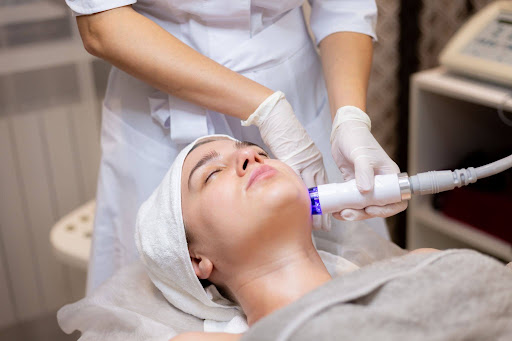
How Does IPL Work for Acne?
Inflammatory acne can leave more than just active breakouts. Once acne improves, many patients are left with post-acne redness, uneven skin tone and temporarily sensitive skin.
One technology that may be considered in selected acne treatment plans is IPL (Intense Pulsed Light).
IPL uses controlled pulses of broad-spectrum light to target specific structures within the skin. Depending on the device, filter and treatment settings, IPL may help address certain factors associated with inflammatory acne, post-acne redness and uneven pigmentation.
At Oceania, IPL is not performed using a one-size-fits-all setting. A physician assesses the patient’s skin before determining whether IPL is appropriate and selecting suitable treatment parameters.
What Is IPL?
IPL – Intense Pulsed Light – uses pulses of broad-spectrum light rather than a single laser wavelength.
Different wavelengths can interact with different chromophores within the skin, including:
- Hemoglobin in blood vessels.
- Melanin in pigmentation.
Because of this, IPL technology can be used for various aesthetic concerns, including selected cases of skin redness, pigmentation and post-acne changes.
The actual outcome depends on the device, filter, energy settings, skin condition and professional indication.
How Can IPL Support Inflammatory Acne?
For selected cases of inflammatory acne, IPL may be considered as a supportive treatment.
Appropriate light energy may interact with certain factors involved in the inflammatory environment of acne-prone skin.
However, IPL is not a universal treatment for every type of acne.
Patients with severe inflammatory acne, cystic acne or deep lesions should receive a professional assessment to determine whether IPL is appropriate or whether another treatment approach should be prioritized.
Can IPL Help Post-Acne Redness?
This is one of the potential applications of light-based technology.
After inflammatory acne heals, residual vascular changes and inflammation may leave the skin looking red or pink for an extended period.
In suitable cases, IPL may help improve post-acne redness by selectively targeting structures associated with the red appearance.
However, post-inflammatory erythema (PIE) and post-inflammatory hyperpigmentation (PIH) are not the same condition.
Correct assessment is therefore important before selecting a technology.
Can IPL Make Your Skin Brighter?
IPL should not simply be viewed as a “skin whitening” treatment.
In appropriate cases, light-based technology may help:
- Improve overall skin tone.
- Reduce the appearance of certain types of redness.
- Support improvement of selected pigmentation concerns.
- Make the complexion appear more even and radiant.
At Oceania, the goal is healthy, balanced and naturally even-looking skin, rather than changing a patient’s natural skin color.
Is IPL Suitable for Every Skin Type?
No.
The safety and effectiveness of IPL depend significantly on skin tone, pigmentation, sensitivity and treatment parameters.
People with higher melanin levels or a history of post-inflammatory hyperpigmentation may require more careful assessment and conservative settings.
Before treatment, the physician may evaluate:
- Skin tone.
- Skin type.
- Acne severity.
- Inflammation.
- Post-acne redness.
- Pigmentation.
- Previous treatments.
- Risk of post-inflammatory hyperpigmentation.
The IPL Acne Treatment Process at Oceania
Step 1: Professional Assessment
A physician evaluates active acne, inflammation, post-acne redness and the overall condition of the skin.
Step 2: Define Treatment Goals
Depending on the patient, the goals may include:
Acne control → Redness reduction → Tone improvement → Skin recovery.
Step 3: Select IPL Parameters
Treatment settings are adjusted according to the patient’s skin condition and treatment objectives rather than applying a fixed energy level to everyone.
Step 4: IPL Treatment
Treatment is performed in a controlled manner, with attention to the specific areas requiring treatment.
Step 5: Post-Treatment Skincare
Patients receive guidance regarding:
- Sun protection.
- Gentle cleansing.
- Moisturization.
- Avoiding unnecessary irritation.
- Monitoring the skin during recovery.
Why Choose Oceania for IPL Acne Treatment?
Physician-Led Assessment
Oceania prioritizes professional skin assessment before recommending a technology.
Personalized Treatment Plans
Not every acne patient needs IPL.
The physician considers:
- Acne type.
- Inflammation.
- Post-acne redness.
- Pigmentation.
- Skin tone.
- Skin sensitivity.
- Previous treatments.
Professional Technology and Equipment
Oceania uses professional equipment with clear identification and traceability. Certain technologies may meet international standards such as FDA (United States) or CE (European Union) depending on the specific device.
Medical-Standard Treatment Process
The treatment pathway follows:
Assessment → Personalization → Treatment → Monitoring → Aftercare.
Not Every Patient Needs the Same Technology
IPL is not automatically the best choice for every acne patient.
Depending on the skin condition, the physician may consider other approaches such as Aqua Peel, medical peels, other light-based technologies or a more comprehensive acne treatment plan.
English-Speaking Support for Expats
Oceania provides English-speaking support for expats and international patients living in Vietnam, making consultation and aftercare easier to understand.
Does IPL Require Downtime?
Recovery varies depending on the treatment settings and the patient’s skin condition.
Some patients may temporarily experience:
- Mild redness.
- A warm sensation.
- Temporary skin sensitivity.
These reactions should be monitored and managed according to the clinic’s aftercare instructions.
Results should not be judged solely after a single session. The physician can assess the skin’s response and determine whether and when additional treatment is appropriate.
What Should You Do After IPL?
Use Sun Protection
Sun protection is particularly important after IPL to help minimize the risk of post-treatment pigmentation.
Avoid Strong Active Ingredients Unless Advised
Follow the physician’s skincare instructions while the skin is more sensitive.
Minimize Heat and Irritation
Avoid unnecessary heat or activities that may irritate the skin during the initial recovery period when advised.
Keep the Skin Hydrated
Maintaining adequate hydration can support the skin barrier during recovery.
Conclusion
IPL for acne can be a useful supportive option for selected cases of inflammatory acne, post-acne redness and uneven skin tone.
However, IPL is not suitable for every acne type or every skin tone. Accurate skin assessment and appropriate treatment settings are essential for both safety and effectiveness.
At Oceania, physicians assess each patient’s acne, skin tone, inflammation level and treatment goals before developing a personalized plan.
For international patients, English-speaking support makes the consultation and aftercare process easier and more convenient.
FAQ – Frequently Asked Questions
Can IPL completely clear acne?
IPL should not be considered a treatment that can eliminate every type of acne. It may serve as a supportive treatment in selected cases, depending on the patient’s skin condition and professional assessment.
Can IPL reduce post-acne redness?
In suitable cases, IPL may help improve post-acne redness. However, post-inflammatory erythema and brown post-inflammatory pigmentation have different mechanisms and should be assessed separately.
Does IPL make the skin thinner?
IPL is not designed to physically thin the skin surface. However, appropriate treatment parameters are important to minimize unnecessary skin reactions.
Can people with darker skin have IPL?
It depends on the individual case. Skin with higher melanin levels requires careful assessment and appropriate device settings to reduce the risk of burns or post-inflammatory hyperpigmentation.
Can international patients receive IPL treatment at Oceania?
Yes. Oceania welcomes international patients and provides English-speaking support throughout consultation, treatment and aftercare.