


Contents
- 1
- 2 Why Can Deep Melasma Remain Despite Using Creams?
- 3 Why Doesn’t Anti-Melasma Cream Work Permanently?
- 4 How Does Laser Treat Deep-Seated Melasma?
- 5 Is Stronger Laser Energy Always Better for Deep Melasma?
- 6 Deep Melasma Treatment at Oceania: Personalized Care
- 7 Authentic Technology, International Standards
- 8 Why Is Post-Treatment Care Essential?
- 9 FAQ – Frequently Asked Questions About Deep Melasma
- 10 Stop Searching for Stronger Creams for Long-Standing Melasma
- 11 Oceania Spa & Clinic – Personalized Skin Treatment Protocols
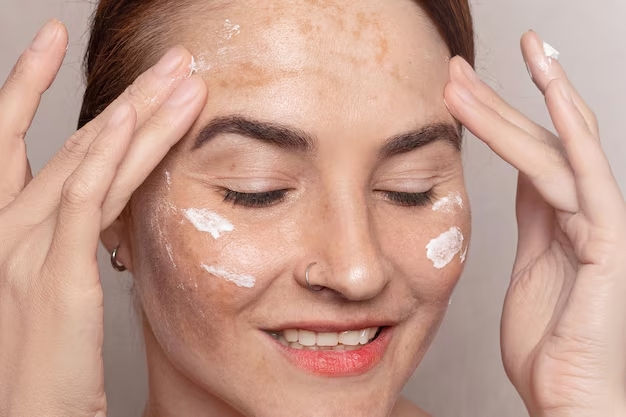
Why Can Deep Melasma Remain Despite Using Creams?
Many people with melasma spend months or even years searching for a cream that can completely fade dark patches. However, the more they treat it, the more stubborn the melasma becomes—sometimes fading temporarily, only to reappear later.
This is particularly true for deep-seated melasma (dermal melasma), where topical cosmetics alone may not achieve the goal of pigment improvement. The reason lies in the unique characteristics and depth of the pigment within the skin layers, requiring a more tailored treatment approach.
So why do anti-melasma creams struggle to treat deep-seated melasma? How does laser technology target pigment? And how can a treatment plan be structured to minimize the risk of recurrence?
What Is Deep-Seated Melasma?
Deep-seated melasma is a common term for long-standing pigmentation cases where melanin resides in the deeper layers of the skin. Melanin—the pigment that determines skin tone—can form brownish or grayish-brown patches when overproduced and accumulated, resulting in an uneven complexion.
Pigment is not always located at the same depth. In some cases, it remains predominantly on the surface (epidermal), while in others, it lies deeper within the dermis. This structural difference explains why skin responds differently to topical products and professional treatments.
Therefore, if melasma has persisted for a long time and resists improvement, a thorough assessment of pigment characteristics is essential before selecting a treatment protocol.
Why Doesn’t Anti-Melasma Cream Work Permanently?
Skincare products help brighten the skin, improve uneven tone, and suppress certain triggers of new pigment formation. However, topical cosmetics primarily act on the skin’s surface layer.
For deeper pigmentation, topical creams often lack the penetration needed to directly shatter long-established, deep melanin deposits.
This is why many feel their anti-melasma cream “works, but never completely clears the skin.” Once usage stops or the skin is exposed to sunlight, the pigmentation often becomes visible again.
This does not mean anti-melasma creams are ineffective. On the contrary, home care remains vital for maintaining skin health and supporting professional results. However, deep-seated and long-standing pigment requires a medical approach capable of targeting deeper layers.
How Does Laser Treat Deep-Seated Melasma?
Pigmentation lasers operate by delivering targeted light energy at specific wavelengths directly to melanin.
Rather than acting only on the surface, select wavelengths penetrate deeper into skin tissue to reach target pigments. Once absorbed, the laser breaks the pigment into microscopic particles, allowing the body’s natural metabolic processes to gradually flush them out.
In clinical practice, technologies like Pico Laser and Nd:YAG Laser are selected based on the patient’s specific skin condition and pigment characteristics.
However, higher energy levels do not equate to better results. The key lies in selecting the precise technology, wavelength, and treatment settings tailored to each individual’s skin.
Is Stronger Laser Energy Always Better for Deep Melasma?
This is a common misconception among those seeking rapid results.
In reality, sensitive or previously over-treated skin requires careful energy management. Excessive laser intensity can cause irritation or inflammation, triggering post-inflammatory hyperpigmentation (PIH) and making melasma harder to manage.
An effective laser protocol must account for multiple factors: melasma type, pigment color, overall skin health, sensitivity levels, and treatment history.
The goal is not just to lighten dark spots, but to build and preserve skin barrier stability long term.
Deep Melasma Treatment at Oceania: Personalized Care
At Oceania Spa & Clinic, melasma management begins with a direct examination and assessment by a physician.
Instead of applying a one-size-fits-all formula, our doctors design a tailored plan based on pigment depth, skin condition, and goals. Depending on individual needs, protocols may combine Pico Laser, Nd:YAG Laser, Mesotherapy, or PRP when clinically indicated.
Oceania prioritizes a complete, closed-loop medical workflow—from initial consultation and protocol selection to procedure execution and post-treatment follow-up.
This structured guidance helps clients understand their skin condition clearly, avoiding the trial-and-error approach of switching between unverified products and technologies.
Authentic Technology, International Standards
Along with medical expertise and custom protocols, Oceania prioritizes authentic equipment and medical-grade products.
We utilize genuine devices and formulas certified by international standards such as the FDA and CE.
This reflects Oceania’s core philosophy: delivering treatments backed by verified technology, authentic products, international standards, and medical oversight—rather than relying on marketing claims for isolated technologies.
For clients who have undergone multiple unsuccessful melasma treatments elsewhere, re-evaluating skin health to build a custom protocol offers a far more controlled path forward.
Why Is Post-Treatment Care Essential?
After laser treatment, the skin requires time to stabilize and recover. During this phase, clients should avoid harsh products that could cause irritation.
Sun protection is critical to guard against UV rays that trigger melanin production. Adhering to customized post-care routines and medical instructions supports optimal skin recovery.
Effective melasma treatment extends beyond the laser session itself; it requires a complete cycle of assessment, treatment, home care, and follow-up.
FAQ – Frequently Asked Questions About Deep Melasma
- Can deep melasma be treated with creams alone? Cosmetics help brighten and maintain even skin tone. However, for long-standing or deep-seated pigmentation, doctors typically recommend combining topicals with advanced technology.
- Should deep melasma be treated with lasers? Lasers are often effective for deep pigmentation. However, wavelength and parameter selection must be customized by a physician based on actual skin condition.
- Does laser treatment cure melasma permanently? No treatment can guarantee that melasma will never return. Long-term sun protection, proper skincare, and managing internal triggers remain crucial after treatment.
- Can I use strong over-the-counter brightening products at home? Using high-potency active ingredients without professional guidance is not recommended. Misuse can compromise the skin barrier, induce inflammation, and worsen hyperpigmentation.
Stop Searching for Stronger Creams for Long-Standing Melasma
If you have tried numerous products without success, the solution is rarely another cream. Identifying the exact depth of pigment and selecting a medically suitable approach is the true starting point for meaningful improvement.
At Oceania Spa & Clinic, patients receive direct evaluations and personalized care plans from experienced physicians within a medical-grade, closed-loop protocol featuring FDA- and CE-certified technologies.
For international residents and visitors seeking skincare solutions in Ho Chi Minh City, Oceania offers bilingual English-Vietnamese consultations to ensure smooth communication throughout the treatment journey.
Oceania Spa & Clinic – Personalized Skin Treatment Protocols
Direct Physician Consultations | Medical-Grade Closed-Loop Process | Genuine Technologies | FDA & CE Standards | Customized Protocols | English & Vietnamese Support
Hotline: (+84) 36 637 0508