


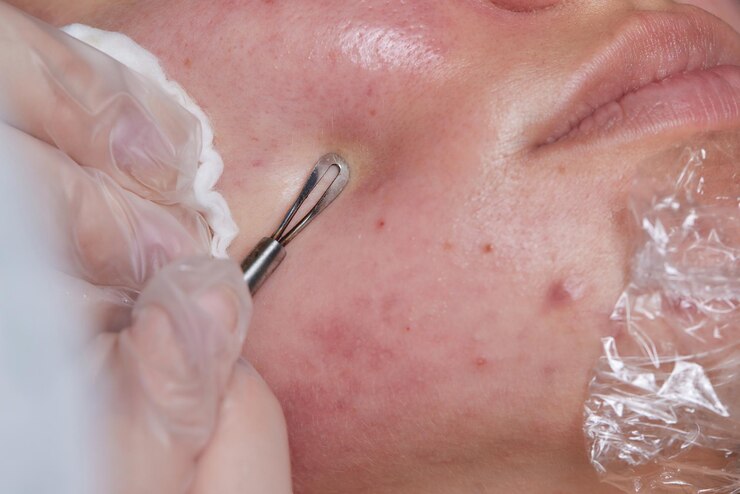
Treating long-standing acne scars can be challenging when the scar is not simply a surface-level problem. In many mature depressed scars, fibrous tissue underneath the skin can pull the scar downward, making it difficult for the surface to become smoother through collagen stimulation alone.
This is why a dual approach combining subcision and RF Microneedling may be considered for suitable cases. Subcision focuses on releasing the tissue that is pulling the scar downward, while RF Microneedling uses controlled energy to support collagen remodeling and improve overall skin texture.
At Oceania Spa & Clinic, acne scar treatment is personalized according to the individual’s scar type, skin condition and treatment goals.
Contents
- 0.1 Why Are Long-Standing Acne Scars Difficult to Improve?
- 0.2 How Does Subcision Help?
- 0.3 What Does RF Microneedling Add?
- 0.4 Why May One Treatment Alone Not Be Enough?
- 0.5 Who May Be Suitable for a Dual Approach?
- 0.6 Acne Scar Treatment at Oceania
- 0.7 What Determines Acne Scar Treatment Results?
- 0.8 FAQ – Acne Scar Treatment
- 1 TREAT THE CAUSE, NOT JUST THE SURFACE
Why Are Long-Standing Acne Scars Difficult to Improve?
Acne scars can develop when the skin does not heal evenly after inflammatory acne.
With long-standing depressed scars, the problem may extend beneath the surface. Fibrous bands can create downward tension, keeping parts of the scar anchored below the surrounding skin.
This explains why some people see limited improvement after using skincare products or undergoing treatments that focus mainly on the skin surface.
If the underlying tension remains, simply stimulating collagen may not fully address the reason why the scar remains depressed.
How Does Subcision Help?
Subcision uses a medical needle to release fibrous connections that may be pulling the depressed scar downward.
Once the restrictive tissue is appropriately released, the scar can have greater freedom to rise and become less tethered to the deeper tissue.
However, subcision does not mean that the scar disappears immediately.
The skin still needs time to repair itself and rebuild collagen. Therefore, subcision is often one part of a broader treatment strategy, particularly when the goal is to improve both scar depth and overall skin texture.
What Does RF Microneedling Add?
While subcision focuses on the tissue pulling the scar downward, RF Microneedling focuses on supporting collagen remodeling.
Very fine needles deliver controlled radiofrequency energy into selected areas of the skin. The controlled thermal stimulation encourages the skin’s natural repair process and collagen activity.
Over time, newly remodeled collagen may help improve firmness, texture and overall skin smoothness.
The two approaches can therefore be understood simply as:
Subcision → releases downward tension → allows the scar base to rise.
RF Microneedling → supports collagen remodeling → improves skin texture.
This complementary action is the foundation of a dual treatment approach for suitable long-standing acne scars.
Why May One Treatment Alone Not Be Enough?
Each treatment addresses a different part of the scar problem.
If RF Microneedling is used alone on a scar with significant tethering, collagen stimulation may occur while the underlying fibrous tension remains.
On the other hand, subcision may release the tethered tissue, but the skin may still require additional support to improve collagen and surface texture.
For suitable cases, combining subcision with RF Microneedling allows treatment to address both the underlying tethering and the skin’s regenerative response.
The key question is therefore not simply “Which technology is best?” but rather “What type of scar do I have, and what is keeping it depressed?”
Who May Be Suitable for a Dual Approach?
A doctor may consider subcision combined with RF Microneedling for clients with:
- Long-standing depressed acne scars.
- Noticeable tethering beneath the scar.
- Uneven skin texture.
- Limited results from previous treatments.
- A goal of improving both scar depth and overall skin quality.
However, not every acne scar requires subcision. The appropriate treatment depends on scar type, depth, location, skin condition and the degree of tethering.
Acne Scar Treatment at Oceania
At Oceania Spa & Clinic, acne scar treatment follows a doctor-led and personalized approach: assessment first, individualized planning, controlled treatment and appropriate aftercare.
The doctor evaluates the characteristics of the scars, the condition of the surrounding skin and the client’s treatment goals before developing an appropriate plan.
When suitable, a dual approach can be considered to address both the underlying fibrous tension and collagen remodeling.
Oceania emphasizes a closed treatment process and medical-oriented standards, together with authentic equipment, technologies and products. Depending on the specific device or product, applicable international standards may include FDA and CE.
This approach is particularly important for acne scar treatment because stronger treatment is not automatically better treatment. The intensity and combination of technologies should match the individual’s skin condition and recovery capacity.
For international clients searching for acne scar treatment in Vietnam, Oceania also provides English–Vietnamese support, helping clients communicate their concerns and understand the treatment and aftercare process.
What Determines Acne Scar Treatment Results?
Technology is only one part of the treatment outcome.
Correctly identifying the scar type, assessing the degree of tethering and selecting the appropriate treatment intensity are equally important.
Acne scar improvement also takes time. Collagen cannot be rebuilt immediately after a treatment session, so the skin needs time to repair and remodel.
Rather than promising to “permanently erase” acne scars, a more realistic goal is to gradually make depressed scars less noticeable, improve skin smoothness and enhance overall skin quality.
FAQ – Acne Scar Treatment
Can subcision and RF Microneedling be performed together?
Not every client should receive the same combination or timing. A doctor should assess the scar type and skin condition before deciding whether the treatments should be combined or performed in separate stages.
Can subcision completely remove acne scars?
Subcision addresses fibrous tethering beneath suitable depressed scars, but it does not guarantee complete scar removal. Additional collagen-supporting treatment may be needed.
Can RF Microneedling treat long-standing acne scars on its own?
RF Microneedling can support collagen remodeling and skin texture. However, when significant tethering is present, collagen stimulation alone may not address the underlying downward tension.
How long does it take to see improvement?
The skin needs time to remodel collagen and repair itself. The timeline varies according to scar type, depth, individual response and treatment plan.
Does every acne scar need subcision?
No. Subcision is particularly relevant when fibrous tissue is tethering the scar downward. Other scar types may require different technologies or a customized combination.
TREAT THE CAUSE, NOT JUST THE SURFACE
For long-standing acne scars, relying on one technology may not always address every part of the problem. When fibrous tissue is pulling the scar downward, releasing that tension may be an important step before supporting collagen remodeling with RF Microneedling.
At Oceania Spa & Clinic, every acne scar treatment plan is based on individual assessment, with doctor-led consultation, personalized treatment, a closed clinical process, and authentic technologies and equipment meeting applicable international standards such as FDA and CE.
Book a doctor-led consultation at Oceania to have your acne scars assessed and receive a personalized treatment plan.
Oceania Spa & Clinic
Website: Oceania.vn
Hotline: (+84) 36 637 0508
International Client Support: English – Vietnamese