


Contents
- 1 What Is PIH?
- 2 PIH vs Melasma: What Is the Difference?
- 3 How Can You Tell If You May Have PIH?
- 4 Why Can Laser or Acne Treatment Cause Darkening?
- 5 The Fast-Track PIH Approach: Recover First, Treat Pigment Second
- 6 Step 3: Alternate With Mesotherapy for Skin Support
- 7 Oceania’s Personalized Approach to PIH
- 8 How Can You Reduce the Risk of PIH Returning?
- 9 Can PIH Fade on Its Own?
- 10 FAQ – Post-Inflammatory Hyperpigmentation
- 11 Don’t Call Every Dark Spot “Melasma”
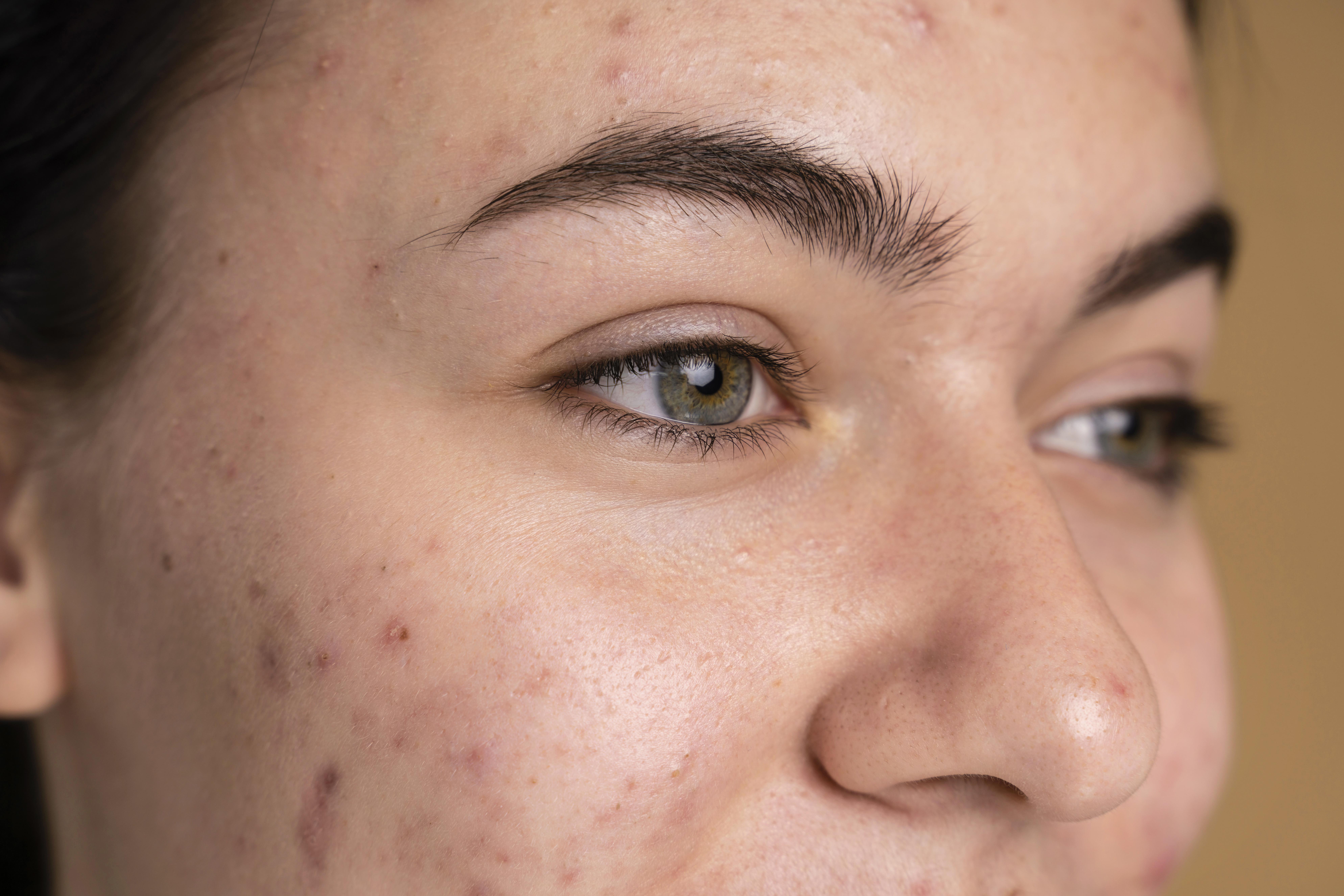
Darker Skin After Acne Treatment? It Could Be PIH
One of the most frustrating experiences after acne treatment or laser is seeing the acne improve while the treated area becomes darker, brown, grey or uneven in tone.
Many people immediately assume they have developed melasma and respond by using stronger brightening products or undergoing additional laser treatments.
But not every dark patch is melasma.
In many cases, the skin may be experiencing Post-Inflammatory Hyperpigmentation (PIH).
PIH can develop when inflammation, irritation or skin injury triggers increased melanin activity. Acne inflammation, picking, peeling and certain laser procedures may all be associated with post-inflammatory pigmentation.
Oceania’s pigmentation information also distinguishes post-acne marks and PIH from melasma and notes that different pigmentation concerns require different treatment approaches.
What Is PIH?
PIH – Post-Inflammatory Hyperpigmentation is increased pigmentation that develops after inflammation or injury to the skin.
The process can be summarized as:
Acne / irritation / laser treatment
↓
Inflammatory response
↓
Increased melanocyte activity
↓
More visible melanin
↓
Darkened skin after inflammation
The key point is that PIH is not the same condition as melasma.
Correct identification is therefore an important first step before choosing treatment.
PIH vs Melasma: What Is the Difference?
| Feature | PIH | Melasma |
| Common trigger | Inflammation, acne, irritation or injury | Hormonal factors, UV exposure and other triggers |
| Onset | Often follows a specific inflammatory event | May develop gradually or recur |
| Distribution | Often follows the area of previous inflammation | Often appears as relatively symmetrical patches |
| Appearance | Brown, grey or dark marks | Brown to grey-brown patches |
| Course | May gradually fade | Often chronic and prone to recurrence |
| Treatment approach | Control inflammation, support recovery and manage pigment | Requires long-term pigment management and trigger control |
Oceania similarly describes melasma as commonly associated with hormonal changes and sun exposure, while PIH is associated with inflammation or skin injury.
Why Should PIH Not Be Treated Like Melasma?
If the skin is still inflamed or the skin barrier is compromised, repeatedly applying aggressive treatments may increase irritation.
The priority should therefore be to calm the skin and restore its condition before aggressively targeting pigmentation.
How Can You Tell If You May Have PIH?
PIH may be more likely when:
- Dark marks appear after inflammatory acne.
- The pigmentation follows the exact area where acne occurred.
- Darkening develops after picking or squeezing pimples.
- Pigmentation appears after peeling or laser treatment.
- The pigmentation is not distributed in the typical symmetrical pattern of melasma.
- The skin is also dry, sensitive or easily irritated.
These signs are only general indicators. PIH and melasma can coexist, so professional assessment is recommended.
Why Can Laser or Acne Treatment Cause Darkening?
Laser and other skin procedures intentionally create controlled effects within the skin.
When properly selected, these treatments can support skin renewal.
However, if the skin is already inflamed, highly sensitive or the treatment parameters are not appropriate, prolonged inflammation may contribute to pigmentation.
For people prone to pigmentation, this may make PIH more visible.
Therefore, the answer is not always:
“Use a stronger laser.”
Instead, the more important question may be:
“Is this pigmentation, or is the skin still inflamed and recovering?”
The Fast-Track PIH Approach: Recover First, Treat Pigment Second
For newly developed PIH, the objective should not simply be to make the skin lighter as quickly as possible.
A more controlled strategy is:
Calm inflammation → support skin recovery → manage pigmentation → reduce recurrence risk.
At Oceania, depending on the skin condition, a doctor may consider a combination of appropriately selected low-energy laser treatment and Mesotherapy, rather than applying the same treatment protocol to every case.
Step 1: Assess Inflammation and Skin Barrier Condition
Before continuing laser or another procedure, the skin should be assessed for:
- PIH severity.
- Persistent redness or irritation.
- Skin barrier impairment.
- Pigment depth and distribution.
- Active inflammatory acne.
- Possible coexisting melasma.
This helps prevent treating pigmentation aggressively while the skin is not ready.
Step 2: Low-Energy Laser – Controlled, Not Aggressive
For selected cases of PIH, laser treatment using carefully adjusted lower-energy settings may be incorporated into a treatment plan.
The objective is not to create an unnecessarily strong inflammatory response.
Instead:
Controlled energy → reduced irritation risk → pigment management → support for skin stability.
Oceania’s pigmentation protocols include laser technologies such as Q-switched and Pico lasers, with different settings selected according to the type of pigmentation and skin condition.
Step 3: Alternate With Mesotherapy for Skin Support
When the skin requires additional hydration and support, Mesotherapy may be considered as part of a combination plan.
Depending on the selected formulation, Mesotherapy can support:
- Skin hydration.
- A fresher appearance.
- Overall skin quality.
- Dull or dehydrated skin.
- A personalized skin recovery plan.
Oceania describes Mesotherapy as delivering selected skin-supporting ingredients into the skin to support hydration, radiance and overall skin quality, with the possibility of combining it with other treatments when appropriate.
Why Alternate Treatments Instead of Doing Everything at Once?
When the skin is sensitive, combining too many procedures in one session may not always be the best approach.
A personalized sequence may look like:
Gentle laser → monitor response → Mesotherapy support → recovery → reassessment
The next treatment can then be adjusted according to how the skin responds.
This is the idea behind a Fast-Track approach: not necessarily doing more procedures, but using a structured plan with the right treatment sequence.
Oceania’s Personalized Approach to PIH
Oceania does not apply a single formula to every case of post-acne or post-laser pigmentation.
The treatment plan is based on the pigmentation pattern and the skin’s current tolerance.
01. Skin Assessment
Assess pigmentation, inflammation and skin barrier condition.
02. PIH vs Melasma Assessment
Not every brown patch is automatically classified as melasma.
03. Appropriate Laser Parameters
If laser is indicated, settings can be adjusted to the skin condition rather than simply increasing energy.
04. Mesotherapy When Appropriate
Mesotherapy may be incorporated to support hydration and overall skin quality during recovery.
05. Monitor and Adjust
The skin is reassessed before continuing or modifying the next stage.
This reflects Oceania’s doctor-led and personalized treatment philosophy, where recommendations are based on individual skin conditions rather than a one-size-fits-all protocol.
How Can You Reduce the Risk of PIH Returning?
1. Protect Your Skin From UV Exposure
Sun exposure can make pigmentation more visible and interfere with pigmentation management.
Daily sunscreen and sensible sun protection are essential.
2. Do Not Self-Peel or Repeat Laser
Darker skin does not automatically mean that stronger treatment is needed.
If the skin is still red, burning or sensitive, seek professional guidance before undergoing another procedure.
3. Avoid Picking or Squeezing Acne
New skin injury can trigger another inflammatory response and create additional PIH.
4. Support the Skin Barrier
Keep the skin appropriately hydrated and follow a gentle skincare routine suitable for your condition.
5. Control the Underlying Acne
If inflammatory acne continues, treating pigmentation alone may not prevent new PIH from developing.
Can PIH Fade on Its Own?
PIH can gradually become less visible over time, particularly when the underlying inflammation is controlled and the skin is adequately protected.
However, the rate of improvement varies.
It may depend on:
- Severity of the original inflammation.
- Pigment depth.
- Individual skin characteristics.
- UV exposure.
- Post-treatment skincare.
- Continued acne or irritation.
- Individual response to treatment.
There is therefore no universal timeframe for complete clearance.
FAQ – Post-Inflammatory Hyperpigmentation
Is PIH the same as melasma?
No. PIH develops after inflammation or skin injury, while melasma is a different pigmentation condition commonly associated with hormonal and environmental factors.
Why does my skin become darker after acne treatment?
Inflammation from acne can increase melanin activity and leave darker marks after the acne has healed. This is a common mechanism behind PIH.
Should I have another laser treatment if I develop PIH?
Not automatically. A professional should first assess whether the skin has recovered and whether laser is appropriate at that stage.
Can low-energy laser help PIH?
In selected cases, carefully controlled laser settings may be incorporated into a pigmentation treatment plan. However, laser is not appropriate for every case of PIH.
Can Mesotherapy help skin recovering from PIH?
Mesotherapy may be considered to support hydration and overall skin quality as part of an individualized recovery plan. The formulation and timing should be selected according to the skin condition.
How long does PIH take to fade?
There is no fixed timeline. Some PIH gradually fades as the skin recovers, while deeper or persistent pigmentation may require professional treatment and longer-term management.
Don’t Call Every Dark Spot “Melasma”
Dark skin after acne or laser treatment does not automatically mean hormonal melasma.
If the pigmentation is PIH, the treatment strategy should begin with controlling inflammation and supporting skin recovery, followed by gradual pigment management.
At Oceania, a personalized Fast-Track approach may incorporate carefully selected low-energy laser treatment alternated with Mesotherapy when appropriate, while prioritizing skin stability and safety.
Recently had acne treatment or laser and noticed your skin becoming darker? Don’t rush into another aggressive treatment. Get the pigmentation assessed first to determine whether it is PIH, melasma or another pigmentation concern.
Learn More at Oceania
🌐 Website: https://oceaniaspa.vn/
🔬 Pico Laser Pigmentation Treatment: https://oceaniaspa.vn/dieu-tri-sac-to-da-cong-nghe-laser-pico/
💧 Mesotherapy: https://clinic-hanoi.oceaniaspa.vn/locations/ha-noi/treatments/meso/
✨ Pigmentation Treatment – Oceania Ba Son, Ho Chi Minh City: https://clinic-hochiminh.oceaniaspa.vn/locations/ho-chi-minh/treatments/pigmentation/
📍 Oceania Ba Son: SH06 – Aqua 3, Vinhomes Golden River, 2 Ton Duc Thang Street, Ho Chi Minh City
📞 Ho Chi Minh Hotline: (+84) 36 637 0508