


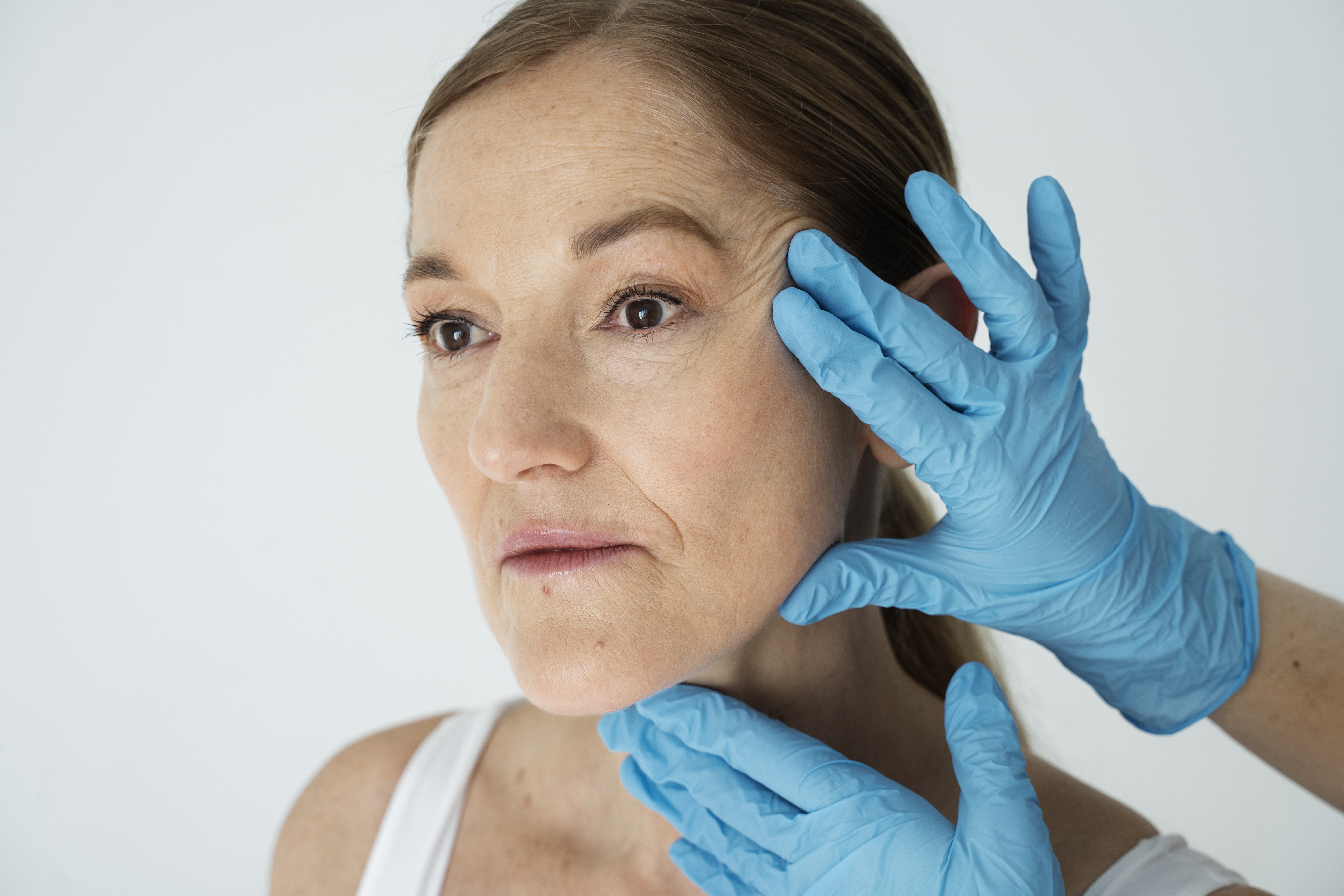
Successful weight loss can create a slimmer body, yet the face may sometimes develop a different concern: hollower cheeks, a softer jawline and loose-looking skin around the lower face and neck.
This is particularly noticeable after rapid or significant weight loss.
The issue is not simply “excess skin.” It reflects changes in soft-tissue volume, skin elasticity and the deeper supportive structures of the face.
For suitable patients with mild to moderate laxity and sufficient remaining soft tissue, HIFU may be considered to support tightening and redefine facial contours after weight loss.
Contents
1. Why Can Rapid Weight Loss Make the Face Look Saggy?
Facial shape is supported by more than the skin.
Beneath it are fat compartments, connective tissue and the SMAS — Superficial Musculoaponeurotic System, which contributes to facial support and contour.
When weight decreases rapidly, facial soft-tissue volume can also decline.
As this natural support is reduced, the overlying skin may no longer sit as closely against the new facial structure.
This can result in:
- Flatter or more hollow-looking cheeks.
- Reduced jawline definition.
- Looser skin along the lower face.
- Mild laxity beneath the chin.
- A more tired or aged appearance.
It is more accurate to say that the skin and supporting tissues may not adapt at the same pace as the underlying volume loss, rather than suggesting that the SMAS simply “fails to contract.”
Age also matters. When natural collagen and elasticity have already declined, the skin may have more difficulty conforming to a newly slimmer facial frame.
2. How Can HIFU Support Skin Tightening After Weight Loss?
HIFU — High-Intensity Focused Ultrasound — delivers concentrated ultrasound energy to selected tissue depths beneath the skin.
Instead of heating the entire surface, HIFU creates small controlled thermal zones within targeted tissue.
This can support:
Controlled tissue contraction, helping selected supportive structures feel firmer.
Gradual collagen remodeling, contributing to improved skin firmness over time.
Certain HIFU cartridges are designed to reach approximately 4.5 mm, a depth commonly associated with deeper tissue and the SMAS region in appropriately selected facial areas.
Other depths may be selected for more superficial tissue.
For suitable patients, HIFU may help improve:
- Mild cheek laxity.
- Jawline definition.
- Lower-face firmness.
- The appearance of the submental area.
- Mild neck laxity.
However, patients who have recently lost significant weight require particular care.
A thinner face does not need the most aggressive HIFU treatment.
If substantial volume has already been lost, treating the wrong area or depth may make the face appear even more hollow.
HIFU also does not replace lost volume. When hollowing is the primary problem, the physician may need to consider a different or combined treatment strategy.
3. HIFU After Weight Loss at Oceania: Treatment Mapped to the New Facial Structure
At Oceania Spa & Clinic, post-weight-loss facial laxity is not treated with a standard HIFU template.
The physician first determines whether the face primarily needs tightening, volume restoration or a combination of approaches.
Soft-tissue volume is assessed before treatment
The assessment considers:
- Cheek volume loss.
- Degree of skin laxity.
- Jawline definition.
- Remaining facial soft tissue.
- Submental anatomy.
- The patient’s new facial proportions after weight loss.
- Previous filler, HIFU or aesthetic procedures.
This allows already hollow areas to be treated cautiously or avoided when appropriate.
Sonorama HIFU with multiple treatment depths
Oceania uses Sonorama HIFU for personalized lifting protocols.
The system provides multiple treatment depths, allowing the physician to adapt treatment from more superficial layers to deeper supportive tissue and the SMAS region according to the patient’s anatomy.
Sonorama HIFU certifications: FDA – KFDA – CE.
More shots are not automatically better
A face that has already lost significant soft-tissue volume should not be treated according to a “more shots, more lifting” philosophy.
Treatment lines, depth and energy are adjusted according to the patient’s new facial structure.
The goal is:
Tighten lax areas – preserve necessary volume – improve definition – maintain natural facial balance.
Conclusion
Facial sagging after rapid weight loss is not simply a matter of excess skin. The face may lose soft-tissue volume faster than the overlying skin and supportive structures can adapt.
HIFU may support tissue tightening and collagen remodeling in suitable patients, but treatment requires particular care when the face has already become thin or hollow.
At Oceania Spa & Clinic, Sonorama HIFU with FDA – KFDA – CE certifications is combined with physician-led assessment of facial volume, treatment depth and target areas to support firmer contours without simply making the face “smaller.”