


Acne scars, wrinkle folds, and reduced skin elasticity can affect confidence even when you maintain a consistent skincare routine. Regular moisturizers may help soften the skin surface, but for depressed scars, long-standing atrophic scars, or visible wrinkle folds, the skin often needs a deeper approach that supports its natural regeneration mechanism.
PRP – Platelet-Rich Plasma is one of the well-known autologous skin rejuvenation methods used in aesthetic dermatology to support tissue repair, stimulate collagen production, and improve overall skin quality.
At Oceania Spa & Clinic Ba Son (Ho Chi Minh), PRP protocols are personalized according to each client’s acne scar condition, wrinkle fold depth, and aging level, helping optimize improvement while prioritizing medical safety.
Contents
- 1 What Is PRP?
- 2 Why Is PRP Used for Acne Scars and Wrinkle Folds?
- 3 How PRP Works to Improve Depressed Areas
- 4 PRP Application in Acne Scar Treatment
- 5 PRP Application in Wrinkle Fold Improvement
- 6 Why Choose PRP Treatment at Oceania Spa & Clinic Ba Son (Ho Chi Minh)?
- 7 PRP Treatment Process at Oceania Spa & Clinic Ba Son (Ho Chi Minh)
- 8 What Advantages Does PRP Have Compared With Some Other Rejuvenation Methods?
- 9 Who Is Suitable for PRP?
- 10 How Should You Care for Your Skin After PRP?
- 11 What Results Can You Expect From PRP?
- 12 FAQ – Frequently Asked Questions About PRP for Acne Scars and Wrinkle Folds
- 13 Regenerate Your Skin Through the Body’s Natural Healing Mechanism
What Is PRP?
PRP stands for Platelet-Rich Plasma. It is a biological preparation extracted from the client’s own blood through a centrifugation process.
PRP contains a higher concentration of platelets than normal blood. When reintroduced into the treatment area, these platelets can release multiple growth factors that support tissue repair, regeneration, and skin structure improvement.
A key advantage of PRP is that it uses autologous material from the client’s own body, making it suitable for those who prefer a biological skin recovery approach with less reliance on external substances.
Why Is PRP Used for Acne Scars and Wrinkle Folds?
Both acne scars and wrinkle folds are related to weakened support structures beneath the skin.
In acne scars, depressed areas often form after inflammatory acne damages connective tissue and collagen. In wrinkle folds, common causes include collagen and elastin decline, volume loss, skin laxity, and repeated facial expressions over time.
PRP is applied because it supports the body’s biological repair process. Instead of simply covering the surface, PRP aims to stimulate the skin to repair itself, produce new collagen, and gradually improve the fullness, smoothness, and elasticity of depressed or wrinkled areas.
How PRP Works to Improve Depressed Areas
1. Blood Collection and Platelet Centrifugation
A suitable amount of blood is drawn from the client by a doctor or medical professional. The blood sample is then placed into a centrifuge to separate its components and collect the platelet-rich plasma.
This is a very important step because PRP quality depends on the extraction process, equipment used, and sterile handling conditions.
2. Collecting Platelet-Rich Plasma
After centrifugation, the plasma portion containing a high concentration of platelets is collected for treatment. Platelets are not only involved in blood clotting but also contain many growth factors that play an important role in wound healing and tissue regeneration.
Common growth factors associated with PRP include:
- PDGF: supports cell proliferation and tissue regeneration
- TGF-β: involved in collagen synthesis and tissue remodeling
- VEGF: supports the formation of new blood vessels
- EGF: supports epidermal recovery and regeneration
- FGF: supports fibroblast activity
These growth factors are the foundation for PRP’s use in skin rejuvenation, scar improvement, and weakened skin recovery.
3. Delivering PRP Into the Treatment Area
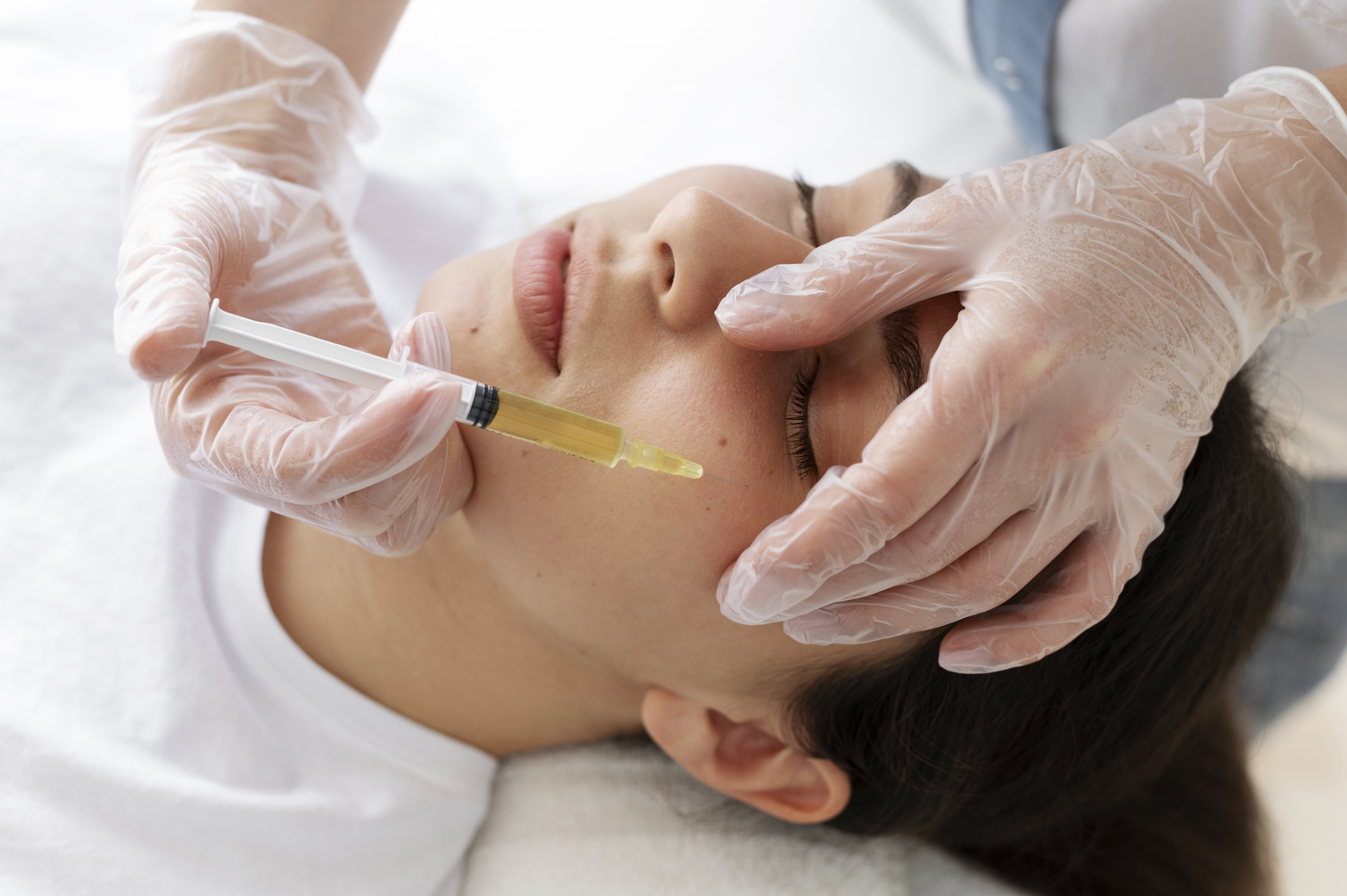
Depending on the skin condition, PRP may be delivered into the treatment area using suitable techniques such as microinjection, microneedling, or combination with resurfacing technologies as indicated.
For acne scars, PRP is usually focused on depressed areas, skin with reduced elasticity, or fibrotic scar tissue. For wrinkle folds, PRP is used to support skin quality around the fold, helping the skin become smoother, firmer, and fresher over time.
4. Stimulating Fibroblasts and Collagen Production
When growth factors are released, they may stimulate fibroblast activity. Fibroblasts are important cells responsible for producing collagen, elastin, and extracellular matrix components.
As a result, depressed or wrinkled areas may gradually improve through tissue remodeling. The effect is usually not immediate like dermal fillers, but develops step by step according to the skin’s natural healing cycle.
PRP Application in Acne Scar Treatment
Which Types of Scars May Be Suitable for PRP?
PRP is often considered in protocols for improving atrophic scars, especially post-acne scars. Depending on the scar type, the doctor may recommend PRP alone or combine it with other methods.
Scar types that may be assessed include:
- Rolling scars
- Boxcar scars
- Newly formed shallow scars
- Depressed scars with thin or weakened skin
- Post-acne scars with poor skin recovery
For long-standing scars, deep scars, or scars with strong fibrotic tethering, PRP often needs to be combined with methods such as fractional laser, subcision, RF microneedling, or other regenerative technologies to achieve better improvement.
How Does PRP Help Improve Acne Scars?
PRP supports acne scar improvement in several ways:
- Stimulates collagen production in depressed scar areas
- Supports connective tissue regeneration beneath the skin
- Enhances recovery after resurfacing treatments
- Improves skin elasticity
- Helps the skin surface appear smoother and more even
- Supports weakened skin recovery after prolonged inflammatory acne
The important point is that PRP does not “fill instantly” like filler. PRP works through biological regeneration, so results usually require time and may need several sessions depending on scar severity.
PRP Application in Wrinkle Fold Improvement
Wrinkle folds may appear around the smile lines, mouth, eyes, forehead, or other areas where the skin has lost elasticity. When collagen and elastin decline, the skin can no longer maintain its previous firmness, making folds more visible.
PRP may support wrinkle fold improvement by:
- Improving skin quality around the fold area
- Increasing elasticity and firmness
- Helping soften fine lines
- Stimulating natural collagen regeneration
- Making the skin appear fresher, healthier, and smoother
- Supporting mild to moderate aging skin recovery
For deep folds, significant volume loss, or obvious sagging, the doctor may recommend combining PRP with other solutions such as HIFU, RF, Meso, PN Healer, or dermal fillers depending on the client’s needs and skin condition.
Why Choose PRP Treatment at Oceania Spa & Clinic Ba Son (Ho Chi Minh)?
1. Consultation by a Professional Team
PRP uses the client’s own blood, so the procedure should be performed under appropriate medical conditions. At Oceania Spa & Clinic Ba Son (Ho Chi Minh), clients receive skin assessment, consultation, and a personalized protocol before treatment.
Accurately assessing scar type, wrinkle fold depth, skin foundation, and recovery ability helps select a more suitable technique and avoid over-treatment or the wrong method.
2. A Process Focused on Safety and Sterility
Sterility is essential in PRP procedures. From blood collection and sample processing to centrifugation and reintroduction of PRP into the treatment area, each step must follow a strict protocol.
At Oceania, the process is designed according to medical safety standards to help minimize the risk of infection, irritation, or unwanted reactions.
3. Combination With Advanced Technology for Better Optimization
In many cases, PRP may achieve better results when included in a multimodal protocol. For example, acne scars may require combination with fractional laser, RF microneedling, or subcision to release fibrotic tissue and stimulate stronger regeneration.
Oceania Spa & Clinic Ba Son (Ho Chi Minh) can personalize the protocol based on:
- Acne scar type
- Scar depth and density
- Wrinkle fold condition
- Skin elasticity
- Aging level
- Post-treatment recovery ability
- Natural or intensive improvement goals
4. Modern Clinic Environment and Professional Experience
Oceania Spa & Clinic Ba Son (Ho Chi Minh) focuses on a professional consultation and treatment experience, from the initial assessment to post-treatment aftercare guidance.
Clients are supported in a modern, private, and comfortable environment, suitable for those who want a safe, structured, and progress-monitored approach to skin treatment.
PRP Treatment Process at Oceania Spa & Clinic Ba Son (Ho Chi Minh)
Step 1: Consultation and Skin Assessment
The doctor or specialist evaluates scar type, depression level, wrinkle fold depth, skin foundation, pigmentation, elasticity, and previous treatment history.
Step 2: Personalized Protocol Planning
Based on the actual condition, clients are advised whether PRP should be performed alone or combined with suitable technologies such as laser, RF, Meso, PN Healer, or other recovery methods.
Step 3: Blood Collection and Sample Processing
A suitable amount of blood is collected from the client and processed with a centrifuge to obtain platelet-rich plasma.
Step 4: Cleansing and Preparing the Treatment Area
The skin is thoroughly cleansed, disinfected, and prepared according to protocol to ensure hygiene before the procedure.
Step 5: Delivering PRP Into the Regenerative Area
PRP is delivered into acne scars, wrinkle folds, or skin areas requiring recovery using a technique suitable for the individual protocol.
Step 6: Soothing and Aftercare Guidance
After the procedure, clients receive instructions on home care, sun protection, skin recovery, and follow-up or future treatment sessions.
What Advantages Does PRP Have Compared With Some Other Rejuvenation Methods?
PRP is popular among many clients because of several notable advantages:
- Uses autologous plasma from the client’s own body
- Supports the skin’s natural recovery mechanism
- May improve acne scars, skin foundation, and signs of aging
- Suitable for a natural rejuvenation approach
- Can be combined with various aesthetic technologies
- Supports recovery after resurfacing treatments
- Does not create an overly altered facial appearance
However, PRP is not the only suitable option for every condition. Very deep scars, severe wrinkle folds, or obvious skin laxity require direct assessment and a combined treatment plan.
Who Is Suitable for PRP?
PRP may be suitable for clients experiencing one or more of the following concerns:
- Post-acne scars
- Mild to moderate atrophic scars
- Reduced elasticity and slow skin recovery
- Fine wrinkle folds or newly formed lines
- Dull, tired-looking skin
- Thin or weakened skin after acne or active treatments
- Those who prefer autologous skin rejuvenation
- Those who want to combine PRP with laser, RF, or other regenerative technologies
People with blood disorders, clotting problems, active skin infection, use of medications affecting blood clotting, or special medical conditions should be carefully assessed by a doctor before proceeding.
How Should You Care for Your Skin After PRP?
Post-PRP care has a major impact on skin recovery and treatment outcomes.
You should keep in mind:
- Keep the skin clean according to the doctor’s instructions
- Avoid touching the treated area with your hands
- Do not use strong active ingredients immediately after treatment
- Moisturize and support the skin barrier
- Apply sunscreen carefully every day
- Avoid sauna, swimming, or intense exercise in the early recovery period
- Do not pick, scratch, or rub the recovering skin
- Attend follow-up appointments as scheduled to monitor progress
If unusual symptoms occur, such as prolonged swelling, excessive redness, heat, burning, or signs of infection, clients should contact the treatment facility promptly for guidance.
What Results Can You Expect From PRP?
PRP works through biological regeneration, so results usually appear gradually over time. Some clients may feel that their skin becomes healthier, smoother, and fresher after recovery. For acne scars or wrinkle folds, the level of improvement depends on:
- Scar type and scar depth
- Whether wrinkle folds are shallow or deep
- The condition of the skin foundation
- Number of treatment sessions
- Combined technologies
- Post-treatment skincare
- Individual healing response and skin regeneration speed
It is important that PRP should not be promoted as a method that can “erase scars completely” or “fully fill wrinkle folds.” PRP is a supportive regenerative method that helps improve skin quality, and results should be evaluated realistically through each treatment stage.
FAQ – Frequently Asked Questions About PRP for Acne Scars and Wrinkle Folds
Can PRP treat acne scars?
PRP may support acne scar improvement by stimulating tissue regeneration and collagen production. For deep or long-standing scars, PRP is often combined with other technologies to optimize results.
Does PRP fill wrinkle folds like filler?
Not exactly. Fillers provide a faster volume-filling effect, while PRP works through biological regeneration, helping improve skin quality and gradually soften wrinkle folds over time.
Is PRP safe?
PRP uses autologous plasma, which offers an advantage in biological compatibility. However, safety depends heavily on sterile protocol, technique, and the client’s health condition.
Is PRP painful?
The sensation depends on the technique, treatment area, and each person’s pain tolerance. Before treatment, the skin is usually prepared and clients are consulted to make the process more comfortable.
How long does it take to see results after PRP?
PRP results usually improve gradually according to the skin’s recovery and collagen regeneration cycle. Some improvement in smoothness, freshness, and elasticity may appear earlier, while acne scars and wrinkle folds usually require more time.
Does PRP require multiple sessions?
Depending on scar condition, wrinkle folds, and skin foundation, the doctor may recommend multiple sessions or combination treatments. A general schedule should not be applied without assessment.
Is PRP suitable for all skin types?
Not every case is suitable. People with blood disorders, clotting problems, skin infection, use of certain medications, or medical conditions should be assessed by a doctor first.
Regenerate Your Skin Through the Body’s Natural Healing Mechanism
Acne scars and wrinkle folds are not only surface-level concerns. They are related to the skin’s support structure, collagen, elastin, and natural healing ability.
PRP – Platelet-Rich Plasma is an autologous rejuvenation method that helps activate natural regeneration, gradually improving depressed scars, wrinkle folds, and overall skin quality.
At Oceania Spa & Clinic Ba Son (Ho Chi Minh), PRP is personalized according to each client’s condition and may be combined with advanced technology to optimize improvement.
If you are dealing with post-acne scars, shallow wrinkle folds, or skin that recovers slowly, schedule a consultation for direct assessment and a suitable treatment plan.
Book a consultation at Oceania Spa & Clinic Ba Son (Ho Chi Minh) to have your scars/wrinkle folds assessed by a doctor and receive a PRP protocol tailored to your skin.