


Pregnancy and breastfeeding are periods when a woman’s body experiences major changes in hormones, circulation, skin pigmentation, and skin sensitivity. Therefore, although HIFU lifting is a non-invasive rejuvenation method, pregnant women should not undergo HIFU treatment.
For breastfeeding women, HIFU is often considered a treatment that requires caution or is relatively contraindicated, depending on the device, health condition, and professional assessment. Ideally, clients should be examined directly by a doctor or dermatology specialist before making a decision.
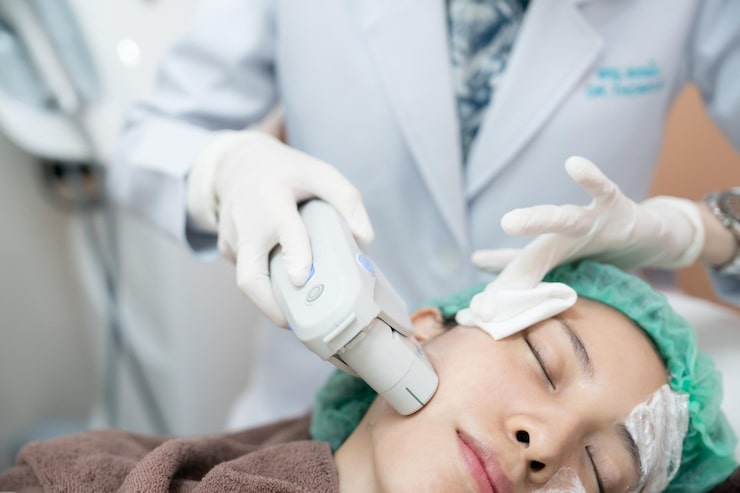
At Oceania Spa & Clinic Ba Son (Ho Chi Minh), all high-tech aesthetic treatments for pregnant and postpartum mothers are advised based on one core principle: safety first, results second, and never pursuing beauty at all costs.
Contents
- 1 What Is HIFU?
- 2 Can Pregnant Women Have HIFU Lifting?
- 3 Why Should Pregnant Women Avoid HIFU?
- 4 Can Breastfeeding Women Have HIFU?
- 5 Who Should Avoid or Postpone HIFU?
- 6 What If You Had HIFU Before Knowing You Were Pregnant?
- 7 When Can You Have HIFU After Giving Birth?
- 8 Safer Alternatives for Pregnant and Breastfeeding Mothers
- 9 Skincare Ingredients Pregnant Women Should Be Careful With
- 10 Why Consult Oceania Spa & Clinic Ba Son (Ho Chi Minh) Before Aesthetic Treatments During Pregnancy?
- 11 SEO FAQ
- 11.1 Can pregnant women have HIFU?
- 11.2 Can breastfeeding women have HIFU?
- 11.3 Why should pregnant women avoid HIFU?
- 11.4 How long after giving birth can I have HIFU?
- 11.5 What treatments can pregnant women choose instead of HIFU?
- 11.6 Should pregnancy-related melasma be treated with laser?
- 11.7 Does HIFU affect breast milk?
- 11.8 Is beauty care during pregnancy safe?
- 12 Safe Beauty Care During Pregnancy and Postpartum at Oceania Spa & Clinic Ba Son (Ho Chi Minh)
What Is HIFU?
HIFU stands for High-Intensity Focused Ultrasound. In aesthetic medicine, HIFU is used to target deeper layers beneath the skin, especially the SMAS layer, to support lifting, firming, and natural collagen stimulation.
HIFU is commonly chosen for concerns such as:
- Mild to moderate facial sagging.
- Double chin.
- Loose or less firm skin.
- Facial lines and folds.
- Neck laxity.
- Aging signs after the age of 30.
However, not everyone is suitable for HIFU. Pregnant or breastfeeding women need careful evaluation before undergoing any energy-based aesthetic treatment.
Can Pregnant Women Have HIFU Lifting?
The answer is: No, HIFU should not be performed during pregnancy.
Although aesthetic HIFU is not surgery and does not inject medication into the body, it is still a technology that uses high-intensity focused energy. During pregnancy, the skin and body become more sensitive and may react differently than usual.
For this reason, if you are pregnant, you should postpone HIFU lifting until after childbirth and once your body has become more stable.
Why Should Pregnant Women Avoid HIFU?
Pregnancy Is a Sensitive Stage for the Body
During pregnancy, hormonal changes are significant. This can make the skin more prone to issues such as:
- Pregnancy-related melasma.
- Unusual dryness or oiliness.
- Redness and irritation.
- Hormonal acne.
- Darkened skin tone.
- Itching or increased sensitivity to heat and mechanical stimulation.
When the skin is changing unpredictably, using high-energy technology may increase the risk of irritation, redness, discomfort, or post-treatment hyperpigmentation.
HIFU Is an Elective Aesthetic Treatment
A general principle during pregnancy is to only undergo procedures that are truly necessary and clearly beneficial to health. Elective aesthetic procedures should be carefully considered or postponed to ensure the safety of both mother and baby.
HIFU is a beauty treatment, not a medically necessary procedure. Therefore, pregnant women should not take unnecessary risks during this stage.
There Is Limited Safety Data for Pregnancy
Currently, there is limited research specifically evaluating aesthetic HIFU use in pregnant women. When there is not enough clear safety evidence, the most cautious choice is to postpone treatment.
This is the safer approach in medical aesthetics: when safety during pregnancy is uncertain, the treatment should not be performed.
Can Breastfeeding Women Have HIFU?
For breastfeeding women, the answer is: You should not decide on HIFU by yourself; a doctor or specialist should evaluate your condition first.
Some clinics and device guidelines consider breastfeeding a contraindication, while other professional opinions may allow consideration in certain cases. Because practices may differ, the safest approach is to have an in-person consultation and case-by-case assessment.
At Oceania Spa & Clinic Ba Son (Ho Chi Minh), breastfeeding women will be assessed based on factors such as:
- How long it has been since childbirth.
- Current health condition.
- Hormonal stability.
- Whether the skin is affected by melasma, weakness, acne, or irritation.
- Whether any medication is being used.
- Whether the treatment area has wounds, inflammation, or infection.
- How necessary the treatment is at that stage.
If HIFU is not suitable yet, the specialist may recommend gentler skincare solutions to prioritize safety.
Who Should Avoid or Postpone HIFU?
To ensure medical safety, the following groups should avoid or postpone HIFU treatment:
- Pregnant women.
- Breastfeeding women who have not been assessed by a doctor.
- People with open wounds in the treatment area.
- People with dermatitis, skin infection, or severe inflammatory acne.
- People with blood clotting disorders.
- People taking anticoagulant medication or at risk of abnormal bleeding.
- People with severe or poorly controlled diabetes.
- People with serious neurological conditions.
- People with implanted electronic devices such as pacemakers.
- People with metal implants in the treatment area.
- People with unstable systemic diseases.
- People with a history of severe allergies or abnormal skin reactions requiring medical consideration.
What If You Had HIFU Before Knowing You Were Pregnant?
If you had HIFU and later discovered that you were pregnant, the most important thing is not to panic. Inform your obstetrician and dermatologist or aesthetic doctor so they can advise you based on the timing of treatment, treated area, and your specific health condition.
You should note down the following information:
- The date you had HIFU.
- The treated area.
- The energy level or device name, if available.
- Whether numbing cream, pain relief, or any supporting products were used.
- Whether you experienced redness, swelling, pain, or any unusual reaction after treatment.
Do not use topical medication, oral medication, or strong recovery treatments on your own without professional guidance.
When Can You Have HIFU After Giving Birth?
The right time to have HIFU after childbirth depends on many factors, including your body recovery, skin condition, whether you are breastfeeding, and overall health.
In general, clients should only consider HIFU when:
- The body has recovered and stabilized after childbirth.
- Hormones are gradually becoming more balanced.
- The skin is no longer overly sensitive or irritated.
- There are no wounds, dermatitis, or infections in the treatment area.
- A doctor or specialist has confirmed that the treatment is suitable.
- If breastfeeding, the client has discussed the case clearly with a specialist.
For many postpartum mothers, it is more reasonable to begin with gentle skin recovery first, then proceed with advanced lifting technology when the body is more stable.
Safer Alternatives for Pregnant and Breastfeeding Mothers
If HIFU is not suitable yet, pregnant or breastfeeding mothers can still care for their skin with gentler, more skin-friendly, and less invasive options. At Oceania Spa & Clinic Ba Son (Ho Chi Minh), clients can receive personalized recommendations depending on their skin condition.
Intensive Skincare With Gentle Ingredients
This is a suitable option for pregnant women with dry, dull, tired, or stressed skin during pregnancy.
The treatment may focus on:
- Gentle cleansing.
- Hydration.
- Skin soothing.
- Relaxing massage.
- Supporting a naturally healthier glow.
- Reducing tightness, dryness, and fatigue.
The key point is to avoid high-energy devices and avoid strong active ingredients that are not suitable during pregnancy.
Gentle Essence Infusion
In some cases, clients may be advised to use gentle essence infusion with ingredients such as:
- HA.
- Suitable Vitamin C.
- Collagen.
- B5.
- Gentle peptides.
- Skin barrier-repairing ingredients.
Essence infusion should be performed with appropriate settings, without overuse, and only after professional evaluation, especially for pregnant or breastfeeding women.
Postpartum Skin Recovery Care
After childbirth, many women experience melasma, dryness, weakened skin, mild sagging, or hormonal acne. Before undergoing stronger lifting treatments, specialists may prioritize skin recovery with:
- Deep hydration.
- Skin soothing.
- Skin barrier restoration.
- Gentle antioxidant care.
- Safe pigmentation care.
- Home skincare guidance suitable for breastfeeding.
Gentle Facial Massage Therapy
Gentle facial massage may help promote relaxation, reduce stress, and make the skin look fresher. However, massage techniques should be performed correctly, avoiding excessive pressure or products that are unsuitable during pregnancy.
Skincare Ingredients Pregnant Women Should Be Careful With
In addition to considering aesthetic technologies, pregnant women should also be cautious with cosmetics and active ingredients used at home.
Some ingredients often require medical advice before use, including:
- Retinoids.
- Hydroquinone.
- High-concentration acid peels.
- Prescription acne medication.
- Whitening products with unclear origins.
- Mixed creams containing corticosteroids.
- Strong peeling or exfoliating ingredients.
Instead, pregnant women should prioritize restorative and protective skincare products such as moisturizer, pregnancy-appropriate sunscreen, B5, ceramides, HA, and gentle active ingredients recommended by professionals.
Why Consult Oceania Spa & Clinic Ba Son (Ho Chi Minh) Before Aesthetic Treatments During Pregnancy?
Skin and Health Assessment Before Treatment
Not every pregnant woman has the same skin condition. Some experience melasma, some have dry skin, some develop acne, and others have sensitive or long-lasting irritation.
At Oceania Spa & Clinic Ba Son (Ho Chi Minh), specialists evaluate the skin condition before recommending a suitable treatment plan.
No Overuse of High-Tech Treatments When Not Necessary
During pregnancy and breastfeeding, Oceania Spa & Clinic Ba Son (Ho Chi Minh) prioritizes gentle, restorative, and safer skincare methods instead of strong interventions.
Personalized Protocols for Each Stage
The first, second, and third trimesters, as well as the postpartum and breastfeeding periods, all involve different needs. Therefore, the skincare protocol should be personalized rather than applied the same way to everyone.
Relaxing, Private, and Professional Experience
Beauty care during pregnancy is not only about skincare. It is also a way for mothers to relax, reduce stress, and feel more confident. Oceania Spa & Clinic Ba Son (Ho Chi Minh) focuses on creating a gentle, safe, and comfortable experience for every client.
SEO FAQ
Can pregnant women have HIFU?
No. Pregnant women should postpone HIFU because it is an elective aesthetic treatment that uses high-intensity focused energy. A safer option is gentle skincare, hydration, and skin recovery.
Can breastfeeding women have HIFU?
Breastfeeding women should be carefully assessed by a doctor or specialist before having HIFU. Some guidelines consider breastfeeding a contraindication, while some cases may be considered depending on individual conditions.
Why should pregnant women avoid HIFU?
During pregnancy, the skin becomes more sensitive and hormones change significantly. HIFU is not a medically necessary procedure, and safety data during pregnancy is limited. Therefore, it is better to postpone the treatment to protect both mother and baby.
How long after giving birth can I have HIFU?
There is no fixed timeline for everyone. Postpartum mothers should wait until the body and skin are stable and receive professional assessment before treatment, especially if they are still breastfeeding.
What treatments can pregnant women choose instead of HIFU?
Pregnant women may consider gentle options such as hydrating facials, skin barrier recovery, relaxing massage, and gentle essence infusion if assessed as suitable by a specialist.
Pregnancy-related melasma is often linked to hormonal changes. Pregnant women should not undergo laser treatment or use strong active ingredients without medical advice. Sun protection and skin recovery should be prioritized until postpartum evaluation.
Does HIFU affect breast milk?
There is not enough clear data to confirm whether HIFU affects breast milk. However, because some guidelines still list breastfeeding as a contraindication or a condition requiring caution, breastfeeding mothers should consult a doctor before undergoing treatment.
Is beauty care during pregnancy safe?
It can be safe if gentle methods, appropriate products, and professional guidance are chosen. Pregnant women should avoid invasive procedures, high-energy technology, or strong active ingredients unless advised by a medical professional.
Safe Beauty Care During Pregnancy and Postpartum at Oceania Spa & Clinic Ba Son (Ho Chi Minh)
If you are pregnant, breastfeeding, or have recently given birth, do not rush into advanced lifting treatments such as HIFU without professional assessment.
At Oceania Spa & Clinic Ba Son (Ho Chi Minh), specialists will examine your skin condition, listen to your needs, and recommend a suitable care protocol for each stage: pregnancy, postpartum recovery, breastfeeding, or preparation for advanced rejuvenation treatments later on.
Book a consultation today to receive a gentle, safe, and personalized skincare plan suitable for both mother and baby.