


Contents
- 1
- 2 PRP + Laser: Why Can These Treatments Complement Each Other?
- 3 What Is PRP?
- 4 How Does Laser Technology Work on the Skin?
- 5 What Are the Potential Benefits of Combining PRP and Laser?
- 6 2. Supporting Skin Texture Improvement
- 7 3. Supporting Skin Rejuvenation
- 8 4. Supporting Recovery After Selected Laser Treatments
- 9 5. Addressing Multiple Skin Concerns in One Treatment Strategy
- 10 Is PRP + Laser Suitable for Every Skin Type?
- 11 PRP + Laser Treatment at Oceania
- 12 Oceania’s USP – Why Do International Patients Choose Oceania?
- 13 How Soon Can You See Results?
- 14 Conclusion
- 15 FAQ – Frequently Asked Questions
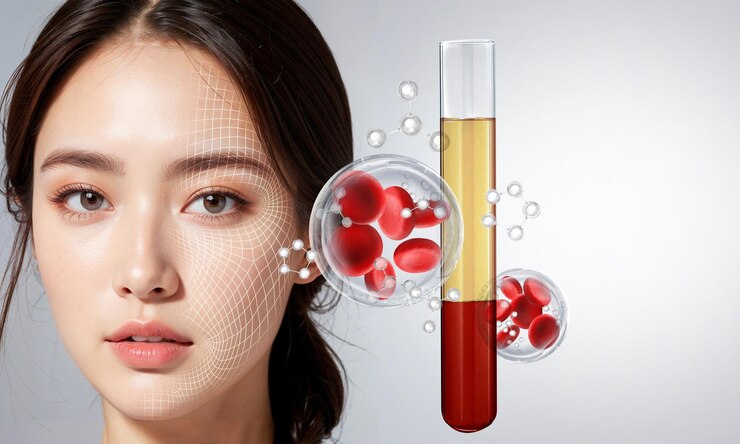
PRP + Laser: Why Can These Treatments Complement Each Other?
Aging skin rarely has just one concern.
A patient may simultaneously experience:
- Dull skin.
- Uneven texture.
- Visible pores.
- Fine lines.
- Acne scars or post-acne marks.
- Reduced skin firmness.
- Signs of sun damage.
In selected cases, PRP (Platelet-Rich Plasma) can be incorporated into a treatment plan alongside Laser technology to address different aspects of skin rejuvenation.
Laser can target specific treatment concerns depending on the technology, while PRP may support biological processes associated with tissue repair and recovery.
However, combining PRP and Laser is not automatically better for everyone.
Treatment order, Laser settings and PRP timing should be determined by a physician based on the patient’s skin condition.
What Is PRP?
PRP stands for Platelet-Rich Plasma.
It is prepared from the patient’s own blood. After blood collection, the sample is processed to obtain a plasma component containing a higher concentration of platelets.
Platelets contain growth factors involved in biological processes related to:
- Tissue repair.
- Tissue regeneration.
- Wound healing.
- Cellular activity.
- Extracellular matrix support.
In aesthetic medicine, PRP may be incorporated into treatment protocols designed to support skin quality and recovery.
How Does Laser Technology Work on the Skin?
Laser is not a single technology.
Different Laser systems use different wavelengths, pulse durations and energy parameters for different treatment targets.
Depending on the technology, Laser may be used to support:
- Pigmentation improvement.
- More even skin tone.
- Skin texture improvement.
- Skin rejuvenation.
- Skin regeneration.
- Improvement of selected types of acne scars.
- Reduction of visible sun-related skin damage.
Therefore, when discussing “PRP + Laser,” it is important to identify the specific Laser technology and treatment goal rather than treating the combination as a standardized protocol.
What Are the Potential Benefits of Combining PRP and Laser?
1. Laser Targets the Treatment Concern While PRP Supports Recovery
One reason physicians may consider combining these approaches is that they can have different roles.
Laser can create a controlled treatment effect within the skin.
PRP may then support biological processes associated with tissue repair and regeneration.
In selected patients, this can form a more comprehensive treatment strategy.
2. Supporting Skin Texture Improvement
Aging skin may develop rougher texture, more visible pores and fine lines.
Certain Laser technologies can target skin structure and stimulate regenerative processes.
PRP may be considered as a supportive approach during the recovery process.
The overall goal is healthier-looking skin that appears:
- Smoother.
- More even.
- Firmer.
- More refined.
3. Supporting Skin Rejuvenation
Laser and PRP may play different roles within a rejuvenation protocol.
Laser may target:
Pigmentation + texture + regeneration
while PRP may support:
Tissue repair + regeneration + recovery
Depending on the patient, a physician may select one treatment or combine multiple approaches rather than performing everything simultaneously.
4. Supporting Recovery After Selected Laser Treatments
Some Laser treatments create a controlled skin response designed to stimulate regeneration.
In appropriate cases, PRP may be considered as part of a recovery-support protocol.
However, timing matters.
Patients should not combine treatments simply because they assume that “more technology means faster results.”
A physician should consider:
- Laser type.
- Energy level.
- Treatment depth.
- Skin condition.
- Recovery capacity.
- Appropriate timing for PRP.
5. Addressing Multiple Skin Concerns in One Treatment Strategy
A patient may want to improve pigmentation while also addressing skin aging and texture.
In such cases, a combination protocol may allow the physician to address multiple goals within one overall treatment plan.
For example:
Pico Laser + PRP
May be considered in selected protocols targeting pigmentation while also supporting overall skin quality.
Fractional Laser + PRP
May be considered in appropriate cases involving texture, acne scars or skin regeneration.
However, treatment selection must always be based on professional assessment.
Is PRP + Laser Suitable for Every Skin Type?
No.
This is particularly important for Asian patients and international residents living in Vietnam.
Different skin types may have different risks of post-inflammatory hyperpigmentation.
A physician may assess:
- Fitzpatrick Skin Type.
- Pigmentation level.
- Skin sensitivity.
- Skin barrier condition.
- History of hyperpigmentation.
- Previous aesthetic treatments.
For patients with a higher pigmentation risk, Laser settings and the treatment strategy may need to be adjusted carefully.
PRP + Laser Treatment at Oceania
At Oceania, physicians do not assume that every patient needs PRP + Laser.
The process begins with:
1. Skin Assessment
The physician identifies the primary concerns the patient wants to improve.
2. Treatment Goals
These may include:
- Rejuvenation.
- Pigmentation.
- Skin texture.
- Acne scars.
- Dull skin.
- Recovery.
3. Technology Selection
The physician determines the most appropriate Laser technology or considers an alternative approach based on the patient’s condition.
4. Determining the Role of PRP
PRP is incorporated only when medically appropriate.
5. Monitoring and Adjustment
The patient’s skin response is assessed throughout treatment so the plan can be adjusted when necessary.
Oceania’s USP – Why Do International Patients Choose Oceania?
Physician-Led Consultation
Oceania follows a doctor-led treatment model, with physicians directly assessing patients before making treatment recommendations.
Personalized Treatment Plans
There is no universal PRP + Laser formula.
Laser settings, number of sessions, treatment intervals and combination methods are adjusted according to individual skin conditions.
Medical-Standard Process and Infection Control
Because PRP involves collecting and processing autologous blood, infection control is particularly important.
Oceania emphasizes controlled procedures, equipment hygiene and appropriate treatment protocols.
Professional Equipment
Oceania uses professional equipment with identifiable information and places emphasis on product traceability. Certain technologies may meet international standards such as FDA (United States) or CE (European Union) depending on the specific device.
International Patient Support
Oceania provides English-language support, helping international patients communicate about:
- Their skin condition.
- Treatment goals.
- Procedures.
- Aftercare.
How Soon Can You See Results?
There is no universal timeline.
The skin needs time to undergo biological processes following treatment.
Results depend on:
- Laser technology.
- Skin condition.
- Treatment goals.
- Number of sessions.
- Age.
- Lifestyle.
- Home skincare.
- Individual response.
For this reason, treatment should not be judged only a few days after a procedure.
Conclusion
Combining PRP and Laser can be considered as part of selected skin rejuvenation and skin-quality treatment protocols when appropriately indicated.
Laser may target concerns such as pigmentation, texture and skin regeneration, while PRP may support biological processes associated with tissue repair and recovery.
The goal is not to use as many technologies as possible. Instead, successful treatment planning depends on:
The right indication → The right technology → The right settings → The right timing → Ongoing monitoring.
At Oceania, physicians directly assess each patient and develop personalized treatment plans based on skin condition, aesthetic goals and individual response.
If you are an international patient living in Vietnam and searching for PRP Treatment Vietnam, PRP Laser Treatment or Skin Rejuvenation in Ho Chi Minh City, start with a professional consultation to determine whether this combination approach is appropriate for you.
FAQ – Frequently Asked Questions
Can PRP and Laser be performed on the same day?
It depends on the Laser technology, treatment intensity and individual skin condition. A physician should determine the appropriate timing.
Does PRP make Laser more effective?
It cannot be claimed that PRP makes every Laser treatment more effective. PRP may serve as a supportive component in selected treatment protocols.
Can PRP + Laser rejuvenate the skin?
It may support improvements in overall skin quality and selected signs of aging in appropriate patients. Results vary between individuals.
Can people with sensitive skin combine PRP and Laser?
It may be possible in selected cases, but the risks of irritation and post-inflammatory hyperpigmentation should be assessed beforehand.
Can foreigners receive PRP + Laser treatment at Oceania?
Yes. Oceania provides English-language support and welcomes international patients living in Vietnam.