


Contents
- 1
- 2 Can RF Microneedling Really Help With Large Pores?
- 3 What Is RF Microneedling?
- 4 Why Can RF Microneedling Improve the Appearance of Pores?
- 5 How Does RF Microneedling Affect Collagen?
- 6 Can RF Microneedling Permanently “Close” Pores?
- 7 Who May Be Suitable for RF Microneedling?
- 8 When Is RF Microneedling Not the First Choice?
- 9 Is RF Microneedling Painful?
- 10 How Should You Care for Your Skin After RF Microneedling?
- 11 RF Microneedling at Oceania – What Makes the Approach Different?
- 12 How Many RF Microneedling Sessions Are Needed?
- 13 Conclusion
- 14 FAQ
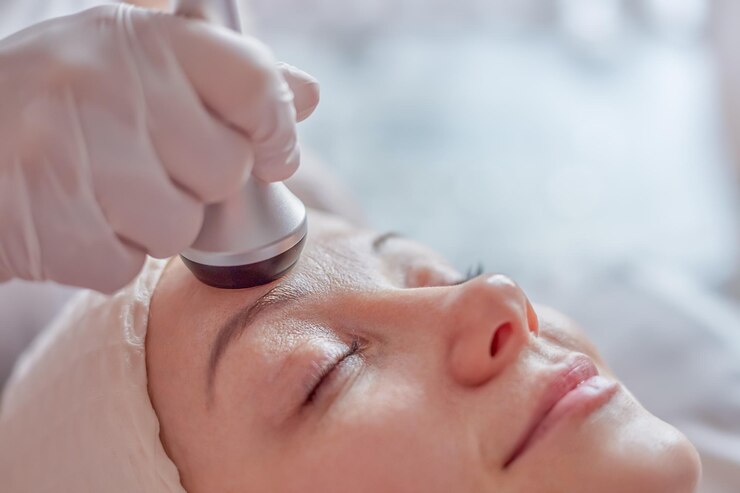
Can RF Microneedling Really Help With Large Pores?
Enlarged pores can make the skin look uneven and less refined, especially around the nose, cheeks and T-zone.
The appearance of pores is often associated with oily skin, excess sebum, clogged pores, changes around the hair follicle and reduced collagen support.
Many people try strong cleansers or “pore-tightening” skincare products at home, but the results may be temporary.
One treatment approach used to improve skin texture and structural quality is RF Microneedling, which combines microneedling with radiofrequency energy.
At Oceania, physicians assess why your pores appear enlarged before determining whether RF Microneedling is actually appropriate.
What Is RF Microneedling?
RF Microneedling, or Radiofrequency Microneedling, combines:
Microneedling + radiofrequency energy + controlled collagen stimulation
Tiny needles create microscopic treatment points in the skin. RF energy is then delivered to the targeted tissue according to the treatment design and device settings.
The goal is to create controlled stimulation that encourages collagen remodeling and skin regeneration.
Unlike conventional microneedling alone, RF Microneedling adds controlled thermal energy from radiofrequency.
Why Can RF Microneedling Improve the Appearance of Pores?
Pores are not simply “doors” that can permanently open and close.
Their size and visibility are influenced by several factors, including:
- Genetics.
- Sebum production.
- Hair follicle size.
- Age.
- Sun exposure.
- Skin elasticity.
- Collagen structure around the follicle.
When collagen and structural support around the follicle decrease, pores may become more visible.
RF Microneedling creates controlled stimulation within the skin, supporting the process of collagen remodeling.
Over time, this may help:
- Improve skin smoothness.
- Refine skin texture.
- Reduce the visible appearance of pores.
- Improve firmness.
- Support improvement of certain superficial acne scars.
How Does RF Microneedling Affect Collagen?
This is one of the key reasons RF Microneedling is used for skin texture concerns.
RF energy generates controlled heat within the targeted tissue.
Combined with the mechanical stimulation from the microneedles, this creates a controlled stimulus that can activate the skin’s repair and remodeling processes.
The process can be summarized as:
Microneedling + RF → controlled tissue stimulation → healing response → collagen remodeling → improved skin structure
Collagen remodeling takes time.
Therefore, results do not necessarily appear immediately after one session.
Can RF Microneedling Permanently “Close” Pores?
No. RF Microneedling should not be understood as a treatment that can permanently close pores.
A more realistic goal is to make pores less visible by improving the surrounding skin structure and overall texture.
If the skin continues to experience:
- Excess oil production.
- Clogging.
- Significant sun exposure.
- Inappropriate skincare.
pores may become more visible again over time.
For this reason, professional treatment should be supported by oil control, appropriate cleansing, sun protection and a suitable home skincare routine.
Who May Be Suitable for RF Microneedling?
RF Microneedling may be considered for people experiencing:
Visible Enlarged Pores
Especially around the cheeks, nose and T-zone.
Uneven Skin Texture
Rough or less-refined skin surfaces.
Reduced Skin Firmness
Age-related collagen changes can affect the structural support of the skin.
Superficial Acne Scars
In selected cases, RF Microneedling may be incorporated into an acne scar and texture treatment plan.
However, not everyone with large pores needs RF Microneedling.
When Is RF Microneedling Not the First Choice?
If enlarged pores are primarily related to excess sebum and congestion, oil control and appropriate cleansing may be more important initially.
If you have active inflammatory acne, a physician may prioritize controlling the inflammation before performing a larger-area microneedling treatment.
For pigmentation, deeper scars or other structural concerns, another technology or combination approach may be more appropriate.
The key is not to choose a treatment simply because it is advertised as a “pore tightening” procedure.
Is RF Microneedling Painful?
The sensation depends on:
- Treatment area.
- Needle depth.
- RF energy level.
- Individual pain tolerance.
A topical numbing cream may typically be used before treatment to improve comfort.
After treatment, temporary effects may include:
- Mild redness.
- Warmth.
- Slight swelling.
- Small pinpoint marks at needle entry sites.
Recovery varies depending on treatment settings and individual skin response.
How Should You Care for Your Skin After RF Microneedling?
Follow your physician’s post-treatment instructions carefully.
Use Sun Protection
Avoid excessive direct sunlight and use an appropriate sunscreen.
Avoid Aggressive Skin Manipulation
Do not scrub or use physical exfoliants while the skin is recovering.
Support the Skin Barrier
Use recovery-focused skincare recommended by your physician.
Temporarily Avoid Irritating Actives
Depending on your skin condition, certain acids or retinoids may need to be paused temporarily.
RF Microneedling at Oceania – What Makes the Approach Different?
At Oceania, RF Microneedling is not treated as a one-size-fits-all procedure.
A physician evaluates the patient’s skin before recommending treatment.
Direct Physician Assessment
The physician may assess:
- Pore visibility.
- Sebum production.
- Skin texture.
- Skin elasticity.
- Active acne.
- Acne scars.
- Pigmentation.
- Overall skin type.
This helps identify the primary factors contributing to visible pores.
Personalized Treatment Settings
Microneedle depth and RF energy should be selected according to the patient’s skin condition and treatment objectives.
Combination Treatments When Appropriate
If a patient has multiple concerns such as oily skin, congestion, acne scars or pigmentation, the physician may develop a combination plan rather than focusing only on pore appearance.
Medical-Standard Treatment Process
Oceania emphasizes:
✔️ Direct physician assessment.
✔️ Hygiene and infection-control procedures.
✔️ Traceable professional equipment.
✔️ Personalized treatment planning.
✔️ Monitoring of skin response.
✔️ Detailed post-treatment guidance.
Professional Equipment and Products
Oceania prioritizes professional equipment and products with identifiable origins. Certain devices may meet international standards such as FDA or CE, depending on the specific device and product.
International Patient-Friendly Care
Oceania welcomes international patients and provides English-language support.
Patients can receive clear explanations regarding:
- Their skin condition.
- Recommended technology.
- Treatment objectives.
- Recovery expectations.
- Home skincare.
How Many RF Microneedling Sessions Are Needed?
There is no universal number of sessions.
The treatment plan may depend on:
- Pore visibility.
- Collagen condition.
- Skin elasticity.
- Sebum and congestion.
- Associated acne scars.
- Individual response.
The physician can determine an appropriate interval between sessions to allow adequate recovery and collagen remodeling.
Conclusion
RF Microneedling can be an appropriate option for selected patients with enlarged pores, particularly when visible pores are associated with uneven skin texture, reduced collagen support or decreased skin firmness.
However, pore appearance is influenced by multiple factors. Long-term improvement therefore depends not only on technology but also on oil control, appropriate skincare and consistent sun protection.
At Oceania, physicians directly assess each patient’s skin and develop a personalized treatment plan based on the underlying causes and individual skin condition.
If you are looking for RF Microneedling Vietnam, Pore Treatment Vietnam or Large Pores Treatment in Ho Chi Minh City, a professional skin assessment is the best first step to determine the most appropriate approach.
FAQ
Does RF Microneedling actually make pores smaller?
RF Microneedling cannot permanently change the natural size of your pores. It may make pores less visible by improving collagen support, skin texture and firmness.
Is RF Microneedling suitable for oily skin?
It may be suitable in selected cases. However, when enlarged pores are mainly caused by excess oil and congestion, a physician may first prioritize sebum control and appropriate cleansing.
Can RF Microneedling treat acne scars?
It may be incorporated into treatment plans for selected acne scars, particularly certain superficial scars. Deeper scars or scars involving fibrous bands may require other or combination treatments.
How soon can I see results?
Collagen remodeling occurs gradually. Results take time to develop and vary between individuals.
Can international patients receive RF Microneedling at Oceania?
Yes. Oceania supports international patients with English-language consultation and develops treatment plans according to skin condition, treatment goals and individual recovery capacity.