Your Skin Or Hair
May Not Need “More”.
It May Need Better Repair

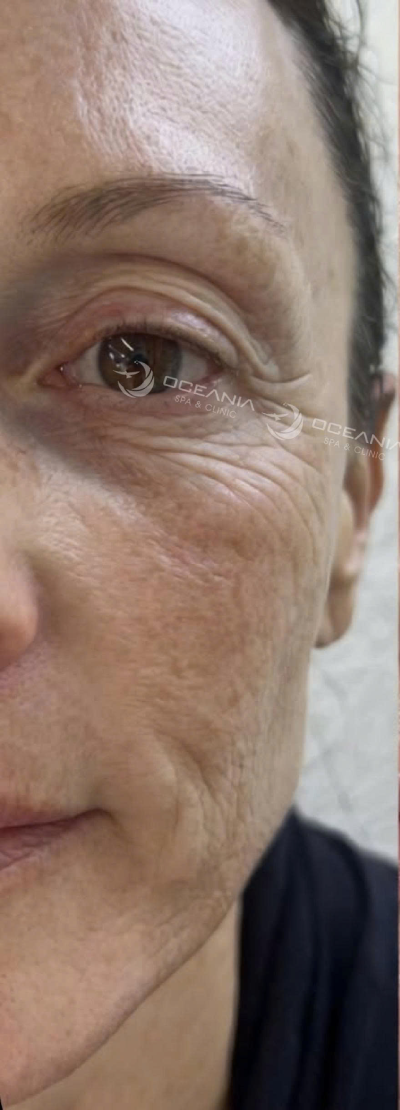
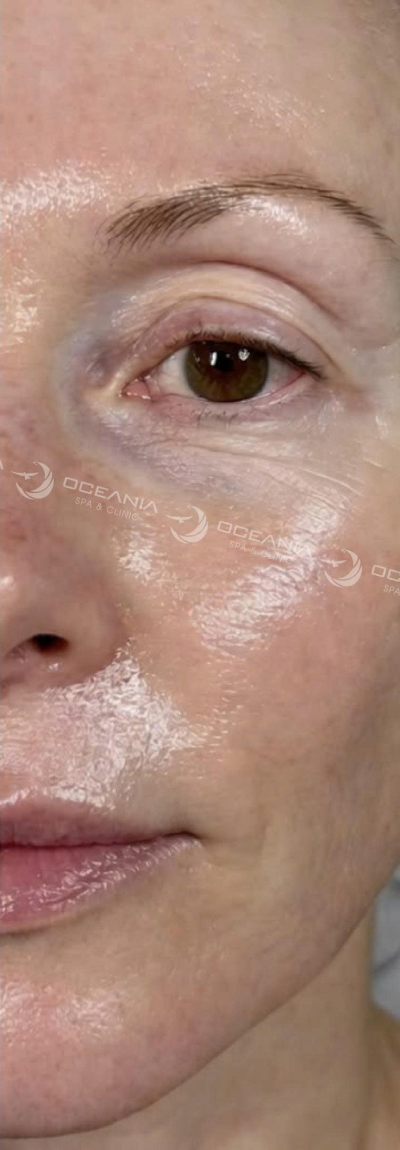
Dull skin. Tired-looking eyes. Thinner neck texture.
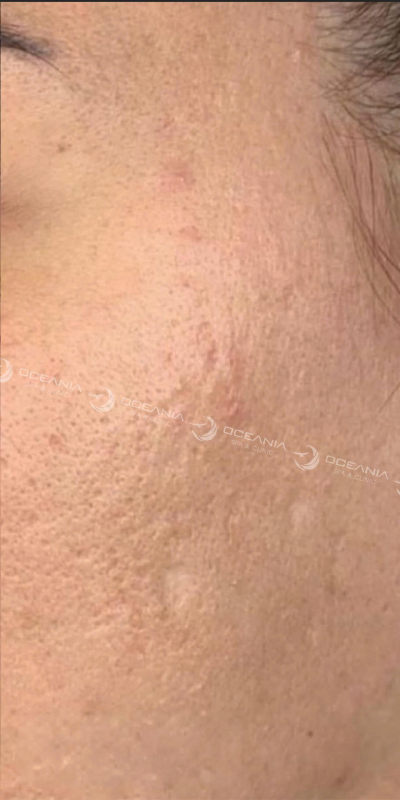
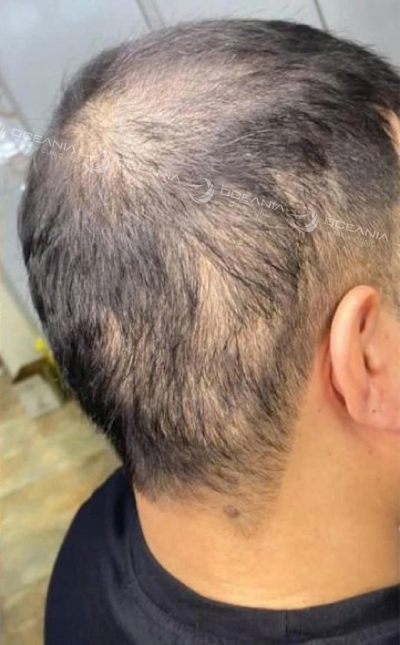
Acne marks that linger. Hair that feels weaker than before.
These concerns are not always solved by adding volume,
freezing movement, or choosing the strongest device

Sometimes, the better question is:

Can your skin or scalp still repair well
and how can we support that process?

At Oceania SPA & Clinic Ba Son

PRP is used to support natural skin and scalp regeneration using platelet-rich plasma from your own blood. But we do not recommend it automatically.
First, we assess whether PRP is actually suitable for your concern, your skin, your scalp, and your expectations.

Doctor-led advice. No obligation. No pressure.

Platelet-Rich Plasma (PRP) sounds natural. But it still needs medical judgement

PRP is often marketed as a simple “natural facial” or “vampire facial”.
But good PRP treatment is not just about drawing blood and applying plasma.

Platelet-Rich
Plasma (PRP)

Your skin or hair
may not need “more”.

It may need

better repair

Good PRP treatment depends on:

Whether your concern is suitable for PRP
How your skin or scalp is likely to respond
Whether PRP should be injected, microneedled, or combined with laser
Whether another treatment would give a clearer result
Whether your expectations are realistic

At Oceania Spa & Clinic Ba Son,
PRP is not treated as a beauty trend

It is part of a doctor-led regenerative treatment plan – used
when it makes sense, and avoided when it does not.

Dull skin. Tired-looking eyes.
Thinner neck texture. Acne marks that linger.
Hair that feels weaker than before.

These concerns are not always solved by adding volume, freezing movement, or choosing the strongest device.
Sometimes, the better question is:

Can your skin or scalp still repair well?
And how can we support that process?

At Oceania Spa & Clinic Ba Son

PRP is used to support natural skin and scalp regeneration using platelet-rich plasma from your own blood. But we do not recommend it automatically. First, we assess whether PRP is actually suitable for your concern, your skin, your scalp, and your expectations.

Doctor-led advice. No obligation. No pressure.

Platelet-Rich Plasma (PRP) sounds natural.
But it still needs medical judgement.

PRP is often marketed as a simple “natural facial” or “vampire facial”.
But good PRP treatment is not just about drawing blood and applying plasma.

Good PRP treatment depends on:

Whether your concern is suitable for PRP
How your skin or scalp is likely to respond
Whether PRP should be injected, microneedled, or combined with laser
Whether another treatment would give a clearer result
Whether your expectations are realistic

When you might consider PRP

Noticing changes that skincare alone cannot fix?

1. Skin that looks tired, dull, or less fresh

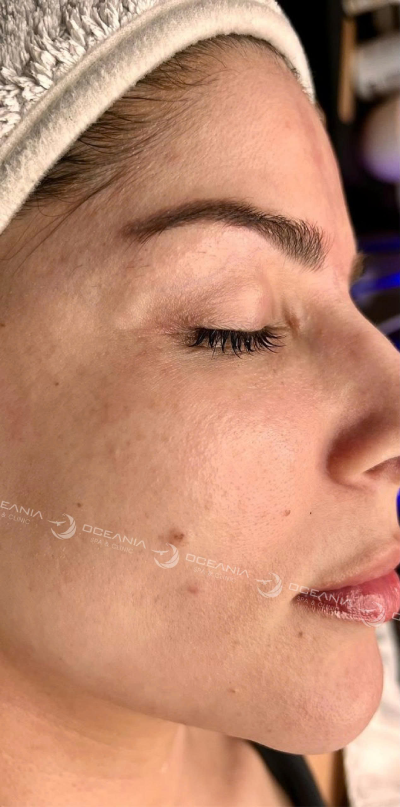
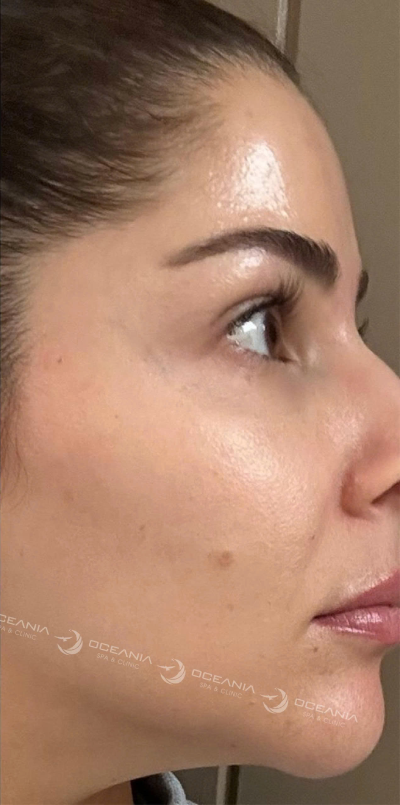
2. Fine lines and weaker skin texture

3. Under-eye skin that appears thin or tired

4. Neck skin that feels less firm or more crepey

5. Acne marks or uneven texture that are slow to improve

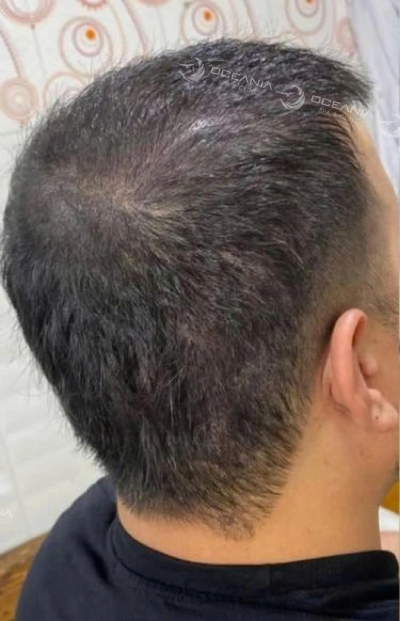
6. Hair that feels thinner, weaker, or less dense

7. Skin that takes longer to recover after stress, travel, acne, or procedures

These concerns are usually about skin quality, collagen support, tissue repair, or scalp condition. That is where PRP can help.

PRP: the technical bit

PRP in Dermatology and Scalp Care
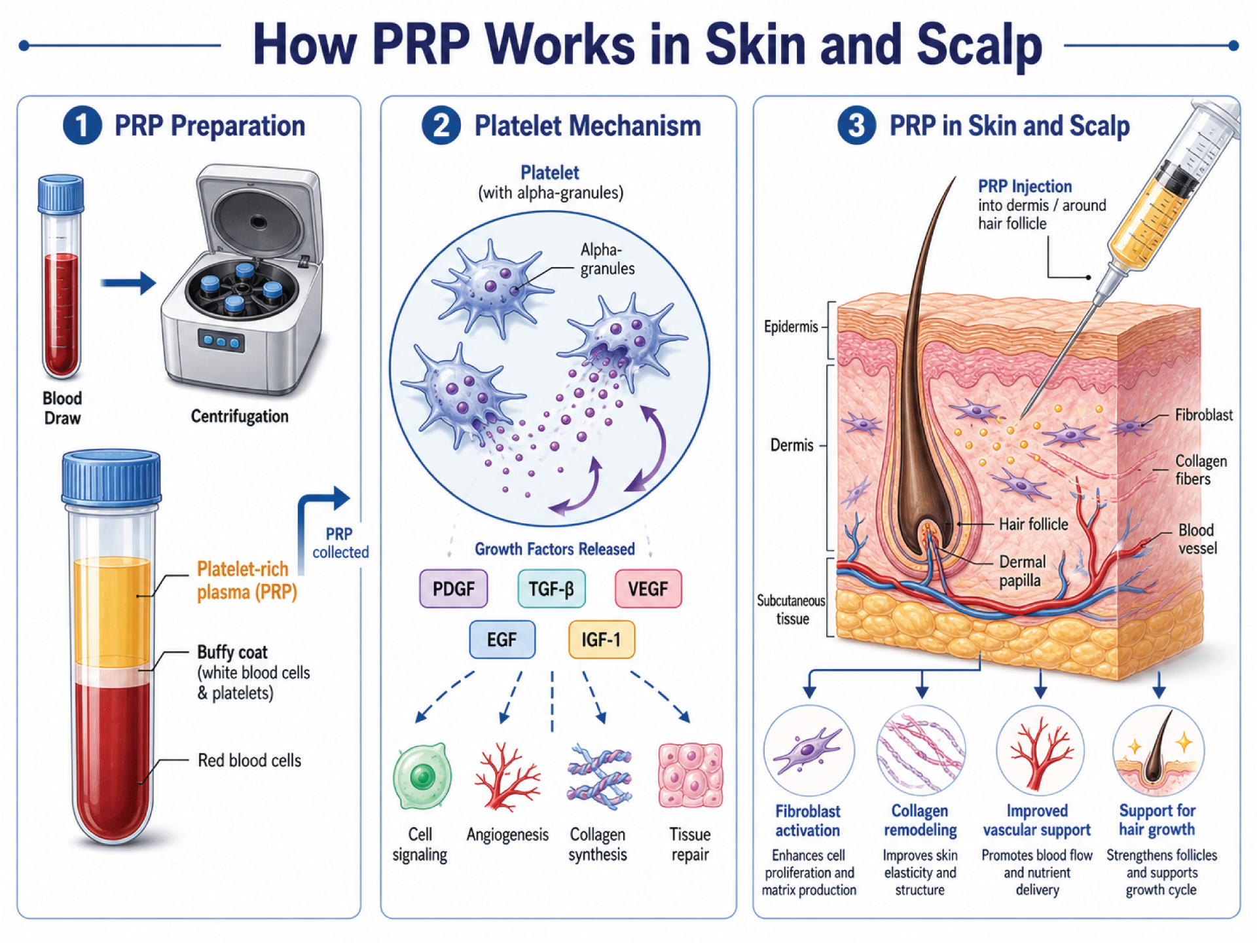
▪ Platelet-rich plasma (PRP) is an autologous (self-donor) blood product prepared by centrifuging a patient’s blood to concentrate platelets within plasma. In dermatology and aesthetic medicine, PRP is used because activated platelets release growth factors and signaling molecules that support tissue repair, blood vessel growth, rebuilding the support structure of cells, and swelling and irritation control.
 
▪ In skin rejuvenation, PRP is believed to act mainly through effects on fibroblasts, collagen production, dermal remodelling, and vascular support. This is why it is often used to improve skin quality and is frequently combined with procedures that create controlled skin injury, such as microneedling, fractional lasers, and radiofrequency-based treatments. In these settings, PRP is intended to enhance repair signalling and support smoother texture, improved elasticity, and overall skin revitalisation.
 
▪ In hair loss treatment, especially androgenetic alopecia, PRP is used to support miniaturising but still-viable hair follicles. Its actions include stimulating dermal papilla activity, improving the follicular micro-environment, supporting blood supply, and encouraging follicles to remain in or re-enter the growth phase.
 
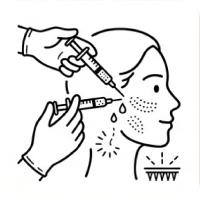
▪ PRP can be used in several ways across skincare and dermatology. A common method is intradermal or superficial subdermal injection, especially for the scalp and some facial protocols. PRP is also widely combined with microneedling, including in treatments often called “vampire facials,” where controlled micro-injury and PRP are used together to promote skin remodelling.
Other applications include combination with fractional CO2 laser treatments for scar and texture improvement, with dermal fillers in some facial rejuvenation protocols such as “vampire facelifts”, and with hair restoration regimens such as topical minoxidil or hair transplantation support.
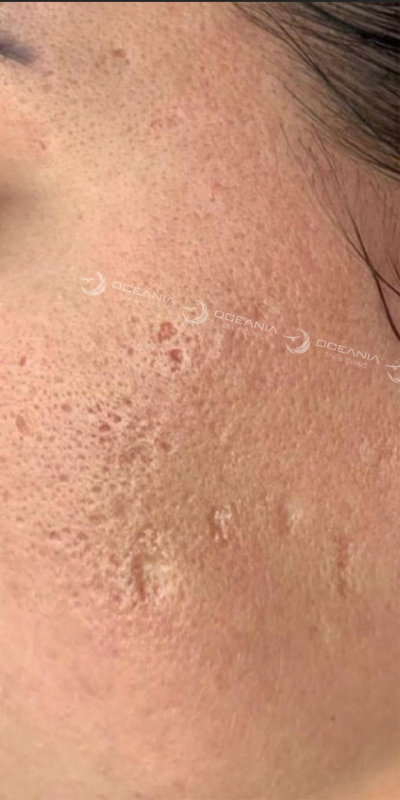
PRP uses a person’s own blood components thus ensures its high biocompatibility compared to other products like meso and exosomes.

Benefits Of Prp Treatment

Fresher-looking skin
Smoother, healthier-looking texture
Better glow and skin vitality
Softer-looking fine lines
Improved skin quality around the eyes
Stronger-looking hair and scalp condition over time
Better recovery support when combined with microneedling or Fractional CO2

The result should look like healthier skin - not like you had “something done”.

Benefits Of Prp Treatment

Fresher-looking skin
Smoother, healthier-looking texture
Better glow and skin vitality
Softer-looking fine lines
Improved skin quality around the eyes
Stronger-looking hair and scalp condition over time
Better recovery support when combined with microneedling or Fractional CO2

The result should look like healthier skin -
not like you had "something" done

When We May Not Recommend PRP Alone By Itself ?

You want an immediate dramatic result
Your main issue is deep facial volume loss
Your under-eye concern is mainly hollowing, pigmentation, or eye bags
Your skin barrier is irritated or not ready for stimulation
You expect one session to solve a long-term concern
You would benefit more from laser, injectables, skincare, or another treatment
You are not medically suitable after assessment
This is where Oceania approach matters. A proper PRP consultation should not persuade you into treatment. It should help you understand whether PRP is worth doing at all

Why Clients Choose Oceania For Prp?

PRP is planned with doctor-led assessment
We treat face, eye area, neck, and scalp
We offer PRP alone or combined with microneedling, Fractional CO2 or HA
We assess if PRP is suitable before recommending it
We explain realistic outcomes and limitations clearly
We focus on long-term quality, not quick sales
We have experience with international and multi-ethnic skin types
We work with advanced aesthetic technologies and professional training standards

Our goal is not to give you the most treatments. It is to help you choose the right repair strategy.

YOUR PRP JOURNEY AT OCEANIA

Consultation and assessment

We begin by understanding your concern, your expectation
and relevant health factors

Suitability check

We decide whether PRP is suitable or whether another option would be more effective. This is where we may say no.

Treatment

Depending on your need, PRP may be injected into targeted areas, applied with microneedling, or used as part of a Fractional CO2 recovery plan

Recovery guidance

You will be guided on aftercare, downtime, skincare, sun protection, and what to avoid after treatment. Mild redness, swelling, tenderness, or small marks may occur depending on the method used.

BEFORE YOUR PRP TREATMENT

To help support the quality of your treatment and recovery, we may advise you to:

▪ Arrive well hydrated
▪ Eat before your appointment if advised
▪ Avoid alcohol before treatment
▪ Avoid harsh exfoliants, retinoids, or irritating skincare before facial PRP
▪ Tell your doctor about medications, supplements, or medical conditions
▪ Avoid blood-thinning medication only if your doctor says it is safe to do so
No pressure. Just a clear recommendation.

Not sure what's right for your skin?

You can share your concern first and we'll guide you from there.

    Where can we reach you?

    Our team will review your message and help you understand the next best step.

    Or

    _86A1674 (1)

    Ask us first

    You can share your concern first and we'll guide you from there.

      Where can we reach you?

      Our team will review your message and help you understand the next best step.

      Or

      Frequently Asked Questions

      Is PRP painful?
      Most clients tolerate PRP well. Depending on the treatment area and method, numbing may be used to improve comfort. You may feel mild discomfort, pressure, or tenderness during or after treatment.
      Downtime depends on how PRP is performed. PRP alone may involve mild redness, swelling, tenderness, or small injection marks. PRP with microneedling usually has more redness. PRP with Fractional CO2 involves more significant downtime of a couple of days because the laser itself is more intensive.
      PRP works gradually. Some clients notice fresher-looking skin within a few days, while collagen and repair-related changes develop over time.
      For scalp concerns, results usually require more patience and often a course of sessions.
      PRP uses your own blood components, which reduces certain risks associated with synthetic products. However, it is still a medical procedure and should be performed with proper assessment, sterile technique, and realistic planning.

      Ho Chi Minh ➡️
      Hanoi ➡️