


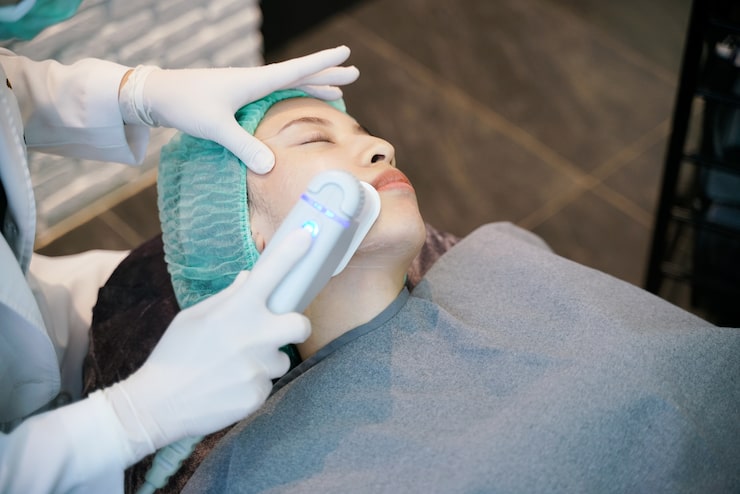
HIFU face lifting is one of the most popular non-invasive skin rejuvenation technologies, chosen by many clients for its ability to support skin tightening, improve sagging, and redefine facial contours.
However, despite many positive results, some people still worry: “Will my face swell after HIFU?”, “Can HIFU cause sunken cheeks?”, “Is HIFU dangerous?”
The answer is: mild swelling after HIFU can be a normal reaction, but sunken cheeks, facial hollowing, or a tired-looking face are often related to improper technique, incorrect tip depth, wrong treatment layer, or unsuitable energy settings.
Therefore, the key question is not only whether you should do HIFU, but where you do it, who performs it, and whether the technology is properly controlled according to medical standards.
Contents
- 1 What Is HIFU? Why Can It Lift the Face?
- 2 The Truth About Swelling After HIFU
- 3 Can HIFU Cause Sunken Cheeks?
- 4 Causes of Sunken Cheeks and Facial Hollowing After HIFU
- 5 Is HIFU Face Lifting Safe?
- 6 Who Is More Likely to Experience Sunken Cheeks If HIFU Is Done Incorrectly?
- 7 How to Reduce the Risk of Swelling and Sunken Cheeks After HIFU
- 8 Safe HIFU Face Lifting at Oceania Spa & Clinic Ba Son (Ho Chi Minh)
- 9 Who Is Suitable for HIFU Face Lifting?
- 10 HIFU Treatment Process at Oceania Spa & Clinic Ba Son (Ho Chi Minh)
- 11 FAQ: Common Questions About Swelling and Sunken Cheeks After HIFU
- 12 Conclusion: HIFU Is Not Scary — Incorrect Technique Is
What Is HIFU? Why Can It Lift the Face?
HIFU stands for High-Intensity Focused Ultrasound.
This technology uses focused ultrasound energy to target deeper skin layers, especially the SMAS layer — the superficial muscular aponeurotic system that plays an important role in supporting facial structure.
When the energy is delivered to the correct tissue layer, HIFU can help:
- Tighten sagging skin
- Improve the jawline
- Support natural facial lifting
- Reduce skin laxity
- Stimulate collagen production
- Rejuvenate the face without surgery
It is important to understand that HIFU is not a general fat-dissolving treatment. When performed correctly, its main purpose is to lift, firm, and improve skin elasticity, not to reduce facial fat uncontrollably.
The Truth About Swelling After HIFU
After HIFU treatment, some clients may experience mild redness, tightness, slight swelling, or a light tingling sensation in the treated area.
This is usually a temporary physiological response as the skin receives focused ultrasound energy.
In most cases, this condition may gradually improve within 24–48 hours, depending on each person’s skin sensitivity and individual response.
When is swelling after HIFU considered normal?
Mild swelling may be considered normal if:
- The skin is only slightly red or tight
- There is no severe pain
- There is no widespread bruising
- There are no unusual burning signs
- The condition gradually improves after 1–2 days
- It does not seriously affect daily activities
When should you be cautious?
You should monitor your condition carefully if the following symptoms appear after HIFU:
- Swelling that lasts for several days without improvement
- Strong pain or burning sensation
- Blistering or signs of burns
- Facial asymmetry
- Unusual numbness
- Noticeable hollow cheeks or a more gaunt-looking face
These signs may be related to improper technique, incorrect tissue depth, or excessively high energy settings, and should be checked by a qualified professional as soon as possible.
Can HIFU Cause Sunken Cheeks?
Yes, it can happen, but this is not the intended result of a medical-grade HIFU treatment.
Sunken cheeks after HIFU usually occur when the energy is delivered to the wrong tissue layer. Instead of targeting the lifting structure, the energy affects the subcutaneous fat layer, reducing cheek volume and creating a hollow, gaunt, or older-looking appearance.
In other words, HIFU does not naturally cause sunken cheeks when performed with the right indication and proper technique. The risk usually comes from improper treatment.
Causes of Sunken Cheeks and Facial Hollowing After HIFU
1. Incorrect tip depth
This is one of the most common causes.
Each area of the face has a different skin thickness and tissue structure. The cheeks, temples, nasolabial folds, jawline, and neck all require suitable tip depth and energy settings.
If the practitioner chooses the wrong tip, the energy may target the fat layer instead of the SMAS layer, increasing the risk of localized fat loss and sunken cheeks.
2. Treating the wrong tissue layer
HIFU requires a clear understanding of facial anatomy. If the correct treatment layer is not identified, the energy may be delivered to the wrong target.
This not only reduces the lifting effect but may also cause issues such as:
- An unnatural-looking face
- Slight cheek hollowing
- Skin that does not firm as expected
- Unbalanced facial contours
- A tired or gaunt appearance after treatment
3. Energy settings that are too high
Stronger energy does not always mean better results.
Each skin type has different aging levels, fat thickness, elasticity, and heat tolerance. If the energy is set too high, the skin and underlying tissue may be overloaded, leading to pain, excessive swelling, or even tissue-related complications.
A proper HIFU treatment should use personalized energy parameters, not the same setting for every client.
4. Choosing an unreliable beauty facility
Unqualified beauty centers often carry higher risks because of:
- Unclear machine origin
- Poor-quality treatment tips
- No skin assessment before treatment
- Practitioners lacking facial anatomy knowledge
- No medical supervision
- The same protocol used for many different clients
This is why many complications occur not because HIFU technology itself is dangerous, but because the treatment process does not meet proper standards.
Is HIFU Face Lifting Safe?
HIFU is a non-invasive, non-surgical rejuvenation method that does not require incisions. When performed with the right indication, proper technique, and reliable equipment, it can support facial lifting, skin tightening, and natural-looking rejuvenation.
However, HIFU still uses energy that penetrates into deeper tissue layers. Therefore, safety depends heavily on:
- The practitioner performing the treatment
- Accurate facial structure assessment
- Selection of the right treatment tip
- Proper energy control
- Device quality
- Post-treatment care protocol
Simply put, HIFU is safe when done correctly — and may carry risks when done incorrectly.
Who Is More Likely to Experience Sunken Cheeks If HIFU Is Done Incorrectly?
Some clients need a thorough medical assessment before undergoing HIFU:
- People with naturally thin faces and little cheek fat
- People who already have hollow cheeks or temples
- People with thin skin and weak soft tissue
- People who have had previous aesthetic procedures
- People with significant aging but insufficient facial support tissue
- People who want lifting but may not be suitable for HIFU alone
In these cases, the doctor may need to adjust the treatment plan, reduce energy, avoid certain areas, or combine HIFU with collagen-restoring methods for a more balanced and natural result.
How to Reduce the Risk of Swelling and Sunken Cheeks After HIFU
To make HIFU face lifting safer and more effective, clients should keep the following in mind:
- Do not choose a HIFU provider based only on cheap pricing
- Prioritize clinics with specialist doctors for consultation
- Request a skin and aging assessment before treatment
- Ask clearly about the machine, treatment tips, and protocol
- Do not undergo HIFU too frequently
- Do not combine too many strong technologies at once without medical advice
- Follow post-treatment skincare instructions properly
- Monitor your skin reaction during the first 24–48 hours
A good HIFU treatment is not about using the strongest energy possible. It is about using the right tissue layer, right energy level, right treatment area, and right approach for each individual face.
Safe HIFU Face Lifting at Oceania Spa & Clinic Ba Son (Ho Chi Minh)
If you are looking for a medical-standard HIFU lifting treatment, Oceania Spa & Clinic Ba Son (Ho Chi Minh) is a suitable choice for clients who want safe, natural-looking, and personalized skin rejuvenation.
At Oceania Spa & Clinic Ba Son (Ho Chi Minh), HIFU lifting is built on the principles of: accurate assessment — suitable technology selection — proper energy control — and standardized follow-up care.
Specialist dermatology doctors
Clients are examined, assessed, and consulted by doctors with expertise in aesthetic dermatology.
This helps reduce the risk of incorrect indication, wrong treatment areas, or unsuitable parameter settings.
Personalized protocol for each face
Not everyone is suitable for the same lifting method.
At Oceania Spa & Clinic Ba Son (Ho Chi Minh), each client receives a personalized protocol based on:
- Age
- Degree of sagging
- Skin thickness
- Fat tissue condition
- Facial structure
- Areas that need improvement
- Desired rejuvenation goals
As a result, the treatment focuses not only on lifting but also on maintaining a natural, harmonious appearance while reducing the risk of sunken cheeks.
Authentic technology and equipment
Oceania Spa & Clinic Ba Son (Ho Chi Minh) applies advanced technology systems for skin rejuvenation, lifting, and collagen regeneration according to modern aesthetic standards.
The devices are selected to support doctors in controlling energy, wavelength, and treatment tips suitable for each skin condition.
A variety of lifting technologies
In addition to traditional HIFU, Oceania Spa & Clinic Ba Son (Ho Chi Minh) also offers multiple advanced lifting solutions such as Sonorama HIFU and combined rejuvenation protocols depending on each client’s actual needs.
This gives doctors more options to optimize the treatment plan instead of applying one single method to every aging condition.
Who Is Suitable for HIFU Face Lifting?
HIFU is generally suitable for clients who want to improve:
- Mild to moderate skin sagging
- Lack of facial firmness
- Blurred jawline
- Mild double chin
- Drooping cheeks
- Wrinkled or loose neck skin
- Signs of aging without surgery
- Rejuvenation with minimal downtime
However, to determine whether HIFU is suitable, clients should still have an in-person consultation. Some cases may require a combination with Mesotherapy, PRP, RF, or other collagen-restoring methods to achieve a more harmonious result.
HIFU Treatment Process at Oceania Spa & Clinic Ba Son (Ho Chi Minh)
Step 1: Consultation and skin assessment
The doctor examines the aging condition, level of sagging, soft tissue thickness, and areas that need improvement.
Step 2: Personalized treatment planning
The client is informed about the treatment areas, suitable technology, expected sensations during the procedure, and possible post-treatment reactions.
Step 3: Cleansing and preparation
The skin is thoroughly cleansed to help ensure a safer treatment process and reduce irritation.
Step 4: HIFU treatment at the correct tissue layer
A trained doctor or professional practitioner uses the appropriate treatment tip and controls energy settings according to each facial area.
Step 5: Post-treatment care guidance
Clients receive instructions on skincare, sun protection, hydration, and how to monitor skin reactions after HIFU.
FAQ: Common Questions About Swelling and Sunken Cheeks After HIFU
1. Is swelling after HIFU dangerous?
Mild swelling, slight redness, or tightness during the first 24–48 hours can be a normal reaction. However, if swelling lasts longer, pain becomes severe, the skin feels burned, or the face becomes uneven, you should contact the treatment provider for a check-up.
2. Can HIFU cause sunken cheeks?
HIFU can cause sunken cheeks if performed incorrectly, if the wrong tip is used, or if the energy affects the subcutaneous fat layer. When performed at the correct tissue layer with the right indication, this risk can be significantly reduced.
3. How long does it take to see results after HIFU?
Some clients may feel firmer skin shortly after treatment, but collagen improvement usually takes time. Depending on individual response, skin condition, and the treatment protocol, results may become more noticeable over the following weeks.
4. Should people with thin faces do HIFU?
People with thin faces, hollow cheeks, or low facial fat should be carefully assessed by a doctor. They should avoid undergoing HIFU at unqualified centers because incorrect technique may increase the risk of a more gaunt-looking appearance.
5. Is HIFU painful?
During treatment, clients may feel tingling, deep warmth, or mild tightness in certain areas. This sensation is usually tolerable, but it depends on individual sensitivity and the energy level used.
6. What should I avoid after HIFU?
After HIFU, you should moisturize well, protect your skin from the sun, and avoid saunas, strong facial massage, exfoliation, or strong active ingredients for the first few days if your skin is still sensitive.
7. How often should HIFU be done?
The ideal treatment frequency depends on age, aging level, skin condition, and the technology used. You should receive a personalized recommendation from a doctor and avoid doing HIFU too frequently just to see faster results.
Conclusion: HIFU Is Not Scary — Incorrect Technique Is
The claim that HIFU face lifting can cause swelling and sunken cheeks is not completely false. However, it needs to be understood correctly.
Mild swelling after HIFU can be a normal reaction and usually improves within a short time. But sunken cheeks, facial hollowing, or a gaunt appearance are often related to incorrect technique, wrong tissue depth, wrong treatment tip, or unsuitable energy settings.
Therefore, to achieve safe and natural-looking facial lifting, clients should choose a clinic with qualified doctors, authentic technology, and personalized treatment protocols.
If you are wondering whether your current skin condition is suitable for HIFU, book a consultation at Oceania Spa & Clinic Ba Son (Ho Chi Minh) for a direct assessment by a doctor.
Oceania Spa & Clinic Ba Son (Ho Chi Minh) – Medical-standard lifting, natural rejuvenation, and safety tailored to each face.
You can contact us now for a suitable treatment consultation if you are experiencing:
- Sagging facial skin
- Double chin
- Less defined jawline
- Drooping cheeks
- Neck wrinkles
- A tired-looking face lacking firmness
Book your consultation
Book your consultation at Oceania Spa & Clinic Ba Son today and experience safe, advanced skin lifting technology for firmer, younger-looking skin.
We are located at the heart of Saigon ward, Ho Chi Minh City.