


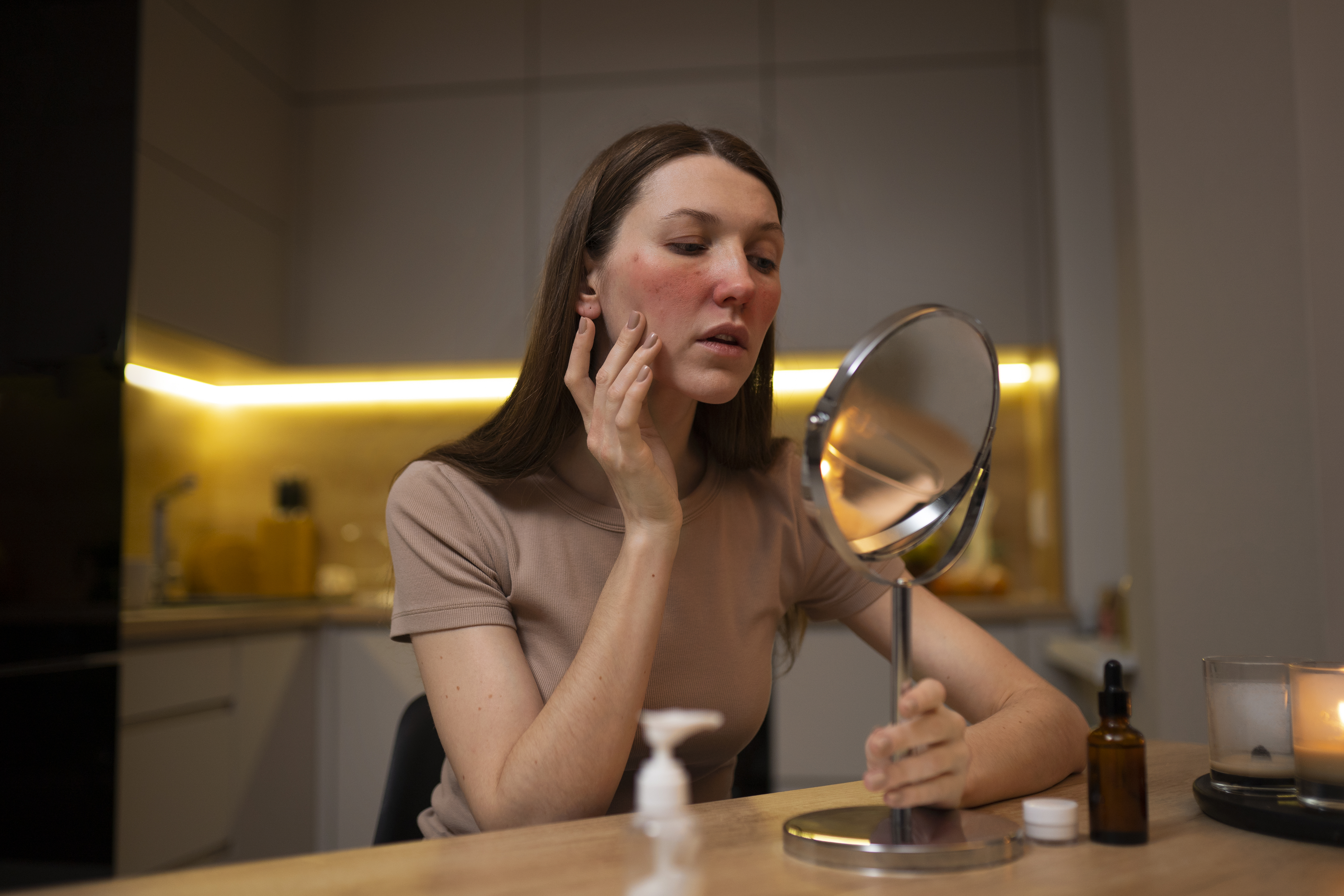
The trend of DIY chemical peeling and applying high-concentration Retinol at home for rapid skin enhancement is causing severe chemical damage for many individuals. Intense burning, raw peeling skin, and sudden dark hyperpigmentation leave many in panic. In reality, unsupervised home peels without medical knowledge destroy the lipid barrier and induce chemical burns. At Oceania Clinic, our medical-grade “Emergency & Recovery” protocol halts acute inflammation and restores damaged skin safely.
Contents
- 1 1. Definition and Symptoms of Chemical Skin Burns from DIY Peels and Retinol
- 2 2. Causes of Chemical Burn Complications at Home
- 3 3. When Do Chemical Burns Become Dangerous?
- 4 4. When Should You Seek Emergency Skin Recovery?
- 5 5. Oceania Clinic’s Medical-Grade “Emergency & Recovery” Protocol
- 6 6. Advanced Equipment and Recovery Technologies at Oceania Clinic
- 7 7. Frequently Asked Questions (FAQ)
1. Definition and Symptoms of Chemical Skin Burns from DIY Peels and Retinol
Chemical burning from DIY peels or high-dose Retinol occurs when potent acids or retinoids cause tissue damage in the epidermal and dermal layers. Common symptoms include:
- Persistent Burning and Severe Pain: Intensely hot, stinging sensations that do not subside even with cold compresses.
- Raw Peeling and Oozing Skin: Loss of the protective epidermal layer, exposing raw skin with fluid exudate or pinpoint bleeding.
- Complete Loss of the Lipid Barrier: Extremely thin, compromised skin showing capillaries and severe hypersensitivity to any skincare product.
- Post-Inflammatory Hyperpigmentation (PIH): Widespread dark spots and skin discoloration emerging shortly after the initial burning.
2. Causes of Chemical Burn Complications at Home
At-home chemical burns typically stem from common errors:
- Using Overly High Concentrations: Applying strong Retinol/Tretinoin or concentrated peel acids without building skin tolerance.
- Combining Multiple Strong Actives Simultaneously: Mixing AHA, BHA, TCA, and high-dose Retinol in one routine without hydration buffers or medical guidance.
- Improper Neutralization and Aftercare: Failing to neutralize peel acids properly or omitting post-peel sun protection and lipid restoration products.
3. When Do Chemical Burns Become Dangerous?
Untreated chemical burns can cause long-term skin degeneration:
- Tissue Necrosis and Scarring Risks: Deep acid penetration destroys dermal collagen, increasing the risk of permanent scars.
- Secondary Bacterial Infections: A compromised lipid barrier allows pathogens to breach, causing purulent inflammation.
- Persistent Post-Inflammatory Hyperpigmentation (PIH): Deep melanin accumulation becomes difficult to treat with standard topical creams.
4. When Should You Seek Emergency Skin Recovery?
The “Golden Window” for treating chemical skin trauma is within the first 24 to 48 hours after noticing burning, blistering, or oozing.
Early intervention suppresses acute inflammation, halts deep tissue breakdown, and reduces the risk of post-inflammatory hyperpigmentation or scarring by up to 80%.
5. Oceania Clinic’s Medical-Grade “Emergency & Recovery” Protocol
At Oceania Clinic, damaged skin restoration follows a strict medical protocol:
Step 1: Acid Neutralization & Immediate Cooling
Neutralizing residual acid molecules and utilizing medical cooling techniques to soothe deep thermal energy and pain.
Step 2: Lipid Barrier Reconstruction
Infusing concentrated Ceramides, Peptides, Hyaluronic Acid, and Epidermal Growth Factors (EGF) to repair broken tissue fibers and rebuild the lipid barrier.
Step 3: Biolight Phototherapy
Utilizing targeted light wavelengths to enhance blood circulation, reduce inflammation, eliminate bacteria, and accelerate cell renewal.
Step 4: Melanin Inhibition (Anti-PIH)
Applying safe melanocyte inhibitors to prevent rebound dark pigmentation during epidermal healing.
6. Advanced Equipment and Recovery Technologies at Oceania Clinic
Oceania Spa & Clinic combines professional expertise, aesthetic technology, and personalized treatment planning:
- US FDA-Certified Medical Equipment: Cooling devices and phototherapy platforms meeting international safety standards.
- Experienced Dermatologists: Consultations and custom recovery protocols are directly managed by expert dermatologists.
- Authentic Dermocosmetics: All recovery formulations hold international safety certifications and are free from alcohol, fragrance, or irritants.
7. Frequently Asked Questions (FAQ)
- Q1: Can skin damaged by home chemical peels fully recover?
- Answer: Yes, skin can recover fully if emergency medical intervention occurs within the golden window. Delays make recovery more complex and increase scarring risks.
- Q2: Should I continue using regular moisturizers on raw, burning skin?
- Answer: No. Applying unverified moisturizers to raw or oozing skin can cause clogging and infection. Consult a dermatologist for sterile, specialized products.
- Q3: How long does chemical burn skin recovery take?
- Answer: Acute soothing takes 3 to 5 days, while complete lipid barrier reconstruction typically requires 2 to 4 weeks depending on damage severity.
Explore Oceania: Oceania Spa & Clinic
- Official Websites: oceaniaspa.vn | clinic-hanoi.oceaniaspa.vn
- Southern Branch: clinic-hochiminh.oceaniaspa.vn
- Branch 2 Address (HCMC): Aqua 3, Vinhomes Golden River, 2 Tôn Đức Thắng Street, Sài Gòn Ward, Ho Chi Minh City, Vietnam
- Hotline: (+84) 36 637 0508
Results vary depending on individual skin condition, biological response and treatment protocol. This content is for general information and does not replace professional medical consultation or diagnosis.