


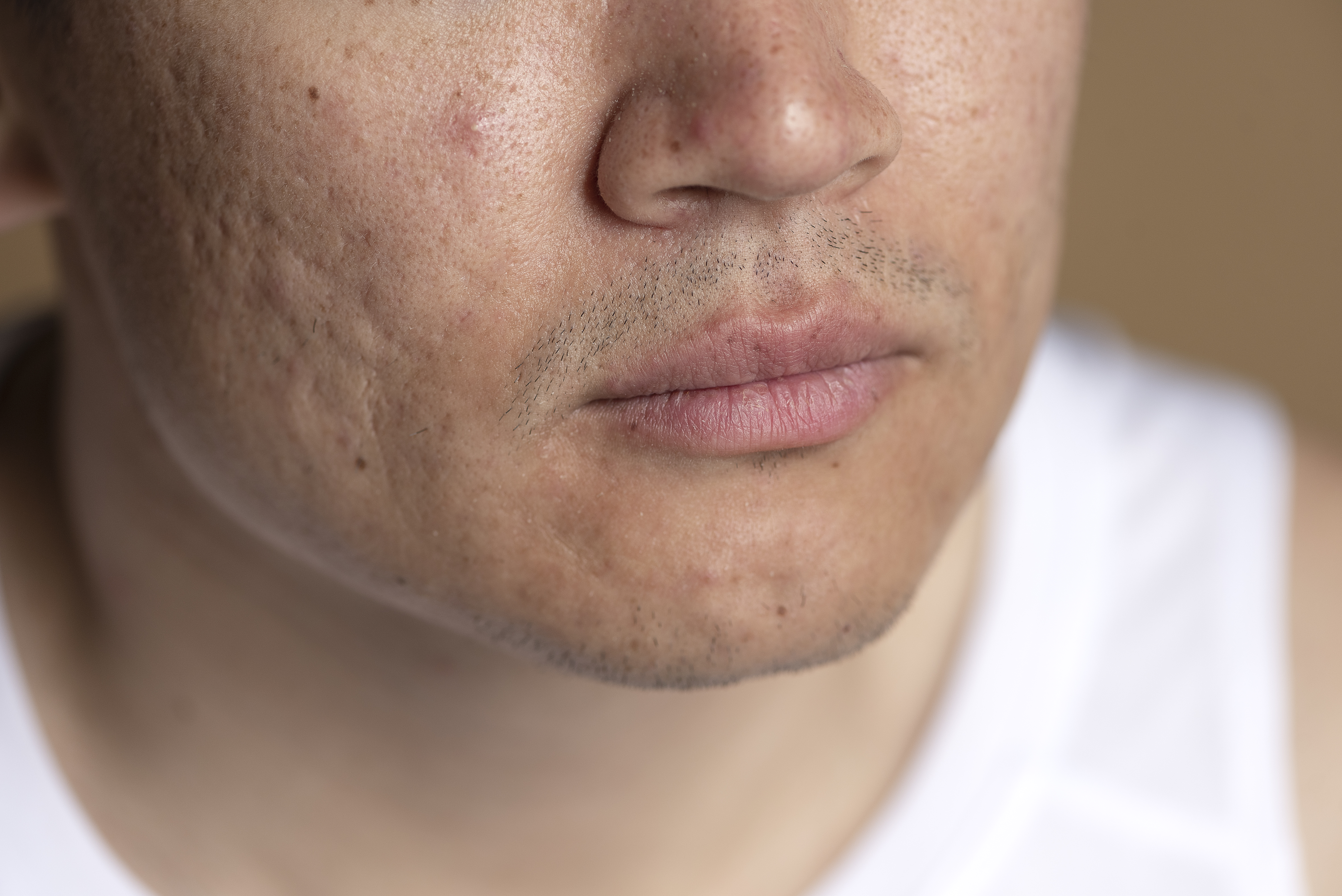
Long-standing acne scars are not just simple depressions on the surface of the skin. Beneath each scar, there are often hardened fibrous tissue bands, also known as scar tethering bands, which attach firmly to the deeper layers of the skin and continuously pull the surface downward.
This pulling force causes the scarred area to remain lower than the surrounding skin, creating visible depressions that are difficult to fill naturally over time. Therefore, in many cases of long-standing acne scars, deep atrophic scars, rolling scars, or fibrotic scars, topical creams or conventional microneedling alone are often not enough to create significant improvement.
This is why subcision, also known as micro-subcision, is considered an important step in many advanced acne scar treatment protocols. Mechanically, subcision uses a needle or cannula inserted beneath the scar to cut the fibrous bands pulling the skin downward, while also creating conditions for new connective tissue formation to help lift the depressed scar.
Contents
- 1 What Is Acne Scar Subcision?
- 2 Why Are Long-Standing Acne Scars Difficult to Fill Naturally?
- 3 Why Can’t Topical Creams Fill Long-Standing Acne Scars?
- 4 Why Is Conventional Microneedling Not Enough for Long-Standing Acne Scars?
- 5 How Does “Releasing the Scar Base” Help Lift the Skin?
- 6 Which Types of Acne Scars Usually Need Subcision?
- 7 What Makes Acne Scar Subcision at Oceania Spa & Clinic Ba Son (Ho Chi Minh) Different?
- 8 Does Acne Scar Subcision Hurt?
- 9 Is Acne Scar Subcision Dangerous?
- 10 Why Should Subcision Be Combined with Laser?
- 11 Who Is Suitable for Acne Scar Subcision?
- 12 Who Should Be Cautious Before Subcision?
- 13 Aftercare After Acne Scar Subcision for Better Skin Recovery
- 14 Why Treat Long-Standing Acne Scars at Oceania Spa & Clinic Ba Son (Ho Chi Minh)?
- 15 FAQ – Common Questions About Subcision for Long-Standing Acne Scars
- 15.1 1. Why do long-standing acne scars need subcision?
- 15.2 2. Can topical creams fill acne scars?
- 15.3 3. Can microneedling replace subcision?
- 15.4 4. Does acne scar subcision hurt?
- 15.5 5. Does subcision cause bruising?
- 15.6 6. How long does it take to see results after subcision?
- 15.7 7. Does subcision need to be combined with laser?
- 15.8 8. Can ice pick scars be treated with subcision?
- 16 Get a Personalized Acne Scar Subcision Plan at Oceania
What Is Acne Scar Subcision?
Subcision is an under-skin treatment technique designed to release the fibrous tissue bands that anchor depressed scars. Once these bands are cut, the skin surface is “freed” from the downward pulling force.
After the scar base is released, the body begins its natural wound-healing response. This process may stimulate new connective tissue formation and gradually help lift the scar base over time.
To put it simply, imagine the skin surface as a piece of fabric. The fibrous scar bands are like strings pulling that fabric downward. If those strings are not cut, even if you try to “add” collagen on top, the skin surface will still struggle to become smooth and even.
Why Are Long-Standing Acne Scars Difficult to Fill Naturally?
Long-standing acne scars usually have a stable fibrotic structure beneath the skin. Over time, these fibrous bands become stronger, harder, and more firmly attached. This is why older scars are usually harder to improve with gentle methods.
Factors that make long-standing acne scars difficult to improve include:
- Loss of supporting tissue beneath the skin.
- Uneven collagen regeneration after acne inflammation.
- Fibrous scar bands attached to the dermis or subcutaneous tissue.
- Long-term downward pulling of the skin surface.
- Reduced natural skin regeneration with age.
- Mixed scar types, such as ice pick, boxcar, and rolling scars.
Dermatology references also classify post-acne atrophic scars into different types, including ice pick, boxcar, and rolling scars. Each scar type requires a different treatment approach rather than one universal method.
Why Can’t Topical Creams Fill Long-Standing Acne Scars?
Topical creams can help moisturize the skin, repair the skin barrier, brighten post-acne marks, or improve skin surface quality to a certain extent. However, creams mainly work on the epidermis, which is the outermost layer of the skin.
Meanwhile, the main reason long-standing acne scars remain depressed lies deeper, in the dermis or below the dermis, where fibrous bands pull the skin surface downward.
Therefore, no matter how advanced a skincare product may be, topical creams cannot effectively:
- Cut fibrous scar bands.
- Replace lost tissue volume.
- Restructure collagen deep in the skin.
- Release the downward pulling force beneath the skin.
- Smooth long-standing depressed scars.
Topical skincare plays a supportive role, but it cannot replace advanced procedures when scars have already developed hardened fibrotic structures underneath.
Why Is Conventional Microneedling Not Enough for Long-Standing Acne Scars?
Traditional microneedling works by creating micro-injuries in the skin to stimulate collagen production. This method may be useful for some cases of shallow scars, uneven skin texture, or rough skin surface.
However, for long-standing acne scars with hardened fibrous bands, conventional microneedling has limitations:
- The depth of action may not be enough to reach scar tethering bands.
- The needle force is not sufficient to cut hardened fibrous tissue.
- It cannot release the downward pulling force.
- Scar-lifting effects may be limited if used alone.
- Multiple sessions may be needed, but results can remain unclear if the indication is wrong.
In other words, microneedling can stimulate collagen, but if the scar base is still pulling the skin downward, newly formed collagen may still struggle to push the scar surface upward effectively.
That is why advanced acne scar treatment protocols usually do not rely on only one method. Instead, they often combine subcision, laser, PRP, chemical peels, or skin recovery treatments, depending on the individual scar condition.
How Does “Releasing the Scar Base” Help Lift the Skin?
Subcision targets the mechanical cause of long-standing acne scars: fibrous bands pulling the skin downward.
When the doctor inserts a specialized instrument beneath the scar and releases the correct layer, the fibrous bands are cut. At this point:
- The downward pulling force is released.
- The scar base has a chance to lift.
- A natural space is created beneath the skin.
- The wound-healing response is activated.
- New collagen and connective tissue can form.
Professional dermatology sources describe subcision as a technique that improves scars by separating the scar surface from its underlying attachments and stimulating connective tissue formation directly beneath the scarred area.
Which Types of Acne Scars Usually Need Subcision?
Not every scar requires subcision. This method is usually more suitable for scars with underlying tethering.
Rolling Scars
Rolling scars usually have a soft, depressed surface, a wider opening, and create a wavy appearance on the skin. This type of scar is commonly associated with fibrous bands pulling the skin downward, so it often responds well to subcision.
Boxcar Scars
Boxcar scars have defined edges, a relatively flat base, and a depressed appearance. Some boxcar scars may require subcision combined with laser, or other resurfacing techniques.
Mixed Long-Standing Scars
Many people do not have only one scar type. They may have mixed scars, including ice pick scars, boxcar scars, rolling scars, enlarged pores, post-acne pigmentation, and uneven skin tone. In these cases, doctors often need to build a multi-layer treatment plan.
Do Ice Pick Scars Need Subcision?
Ice pick scars are usually deep, narrow, and sharply indented like a pinhole. This type may not always be the best indication for subcision alone. Doctors may consider TCA CROSS, laser, or a combination approach depending on the severity.
What Makes Acne Scar Subcision at Oceania Spa & Clinic Ba Son (Ho Chi Minh) Different?
At Oceania Spa & Clinic Ba Son (Ho Chi Minh), acne scar treatment is not simply about performing one procedure. It is designed as a personalized medical-oriented protocol based on scar type, scar depth, skin condition, and each client’s recovery capacity.
1. Accurate Scar Assessment Before Treatment
Before recommending subcision, the doctor will assess:
- Whether the scars are ice pick, boxcar, or rolling scars.
- Whether the scars are shallow or deep.
- Whether the scars are new or long-standing.
- Scar density across the face.
- Degree of fibrotic adhesion beneath the skin.
- Skin type: oily, dry, sensitive, or pigmentation-prone.
- Whether active inflammatory acne is still present.
Correct scar assessment is essential because each scar type requires a different treatment strategy.
2. Releasing Fibrous Scar Bands at the Correct Layer
A doctor or trained professional uses specialized medical instruments to release the tissue beneath the scar base, aiming to cut the fibrous bands that are pulling the skin downward.
The goals of this step are to:
- Cut scar tethering bands.
- Reduce downward traction on the skin surface.
- Create a natural space beneath the scar base.
- Activate the wound-healing response.
- Prepare the skin for the next regenerative steps.
This step requires precise technique, a strong understanding of skin structure, and careful depth control to achieve results while minimizing unnecessary bruising, swelling, or trauma.
3. Combining Multi-Layer Therapies to Prevent Scars from Sinking Again
After subcision, if collagen regeneration is insufficient or maintenance is not properly managed, some scars may tend to sink again.
That is why at Oceania, subcision is often combined with supportive technologies or therapies such as:
- Laser scar treatment: resurfaces the skin and smooths texture.
- Autologous PRP: supports tissue repair and regeneration.
- Medical chemical peels: improve skin surface, post-acne marks, and brightness.
- Recovery skincare: soothes the skin, reduces irritation, and strengthens the skin barrier.
A multi-method approach is commonly used in acne scar treatment because post-acne scars are structurally complex. They often require treatment of both the fibrous tissue underneath and the uneven skin surface above.
4. Skin Recovery After the Procedure
After subcision, the treated area may experience temporary redness, mild swelling, bruising, or tightness. These are common reactions after procedures that act beneath the skin.
At Oceania, clients are guided through staged recovery care to:
- Soothe the skin.
- Reduce redness and discomfort.
- Minimize infection risk.
- Support wound healing.
- Protect the skin from sun exposure.
- Reduce the risk of post-inflammatory hyperpigmentation.
Proper recovery care is essential for better skin regeneration and for limiting unwanted complications.
Does Acne Scar Subcision Hurt?
Subcision is a mildly invasive procedure, so it may cause a feeling of tightness, stinging, or mild discomfort. However, the treatment area is usually cleansed and numbed before the procedure to significantly reduce pain.
The actual sensation depends on:
- Each person’s pain tolerance.
- The number of scars being treated.
- Scar depth and degree of fibrosis.
- Practitioner technique.
- Type of numbing or anesthesia used.
- Treatment area.
After the procedure, clients may feel slight soreness, swelling, or mild bruising. These reactions are usually managed with proper aftercare and medical guidance.
Is Acne Scar Subcision Dangerous?
When performed with the right indication, proper technique, and in a sterile environment, subcision is a commonly used procedure for treating atrophic acne scars. Review studies on subcision have reported it as an effective method for depressed post-acne scars, especially when combined appropriately with other treatments.
However, this procedure may still involve some reactions or risks, such as:
- Bruising.
- Mild swelling.
- Redness.
- Temporary pain or tightness.
- Post-inflammatory hyperpigmentation if aftercare is incorrect.
- Infection risk if the procedure is not sterile.
- Uneven results if the scar type is misdiagnosed or the procedure is performed at the wrong layer.
Therefore, subcision should not be performed at facilities that lack medical expertise or proper sterile standards.
Why Should Subcision Be Combined with Laser?
Subcision addresses the “tethering” underneath the scar, but to improve skin texture, stimulate collagen, and smooth the surface, many cases need additional regenerative technologies.
Subcision Releases Fibrous Tissue
This step cuts the fibrous bands pulling the scar downward, allowing the scar base to lift.
Laser Resurfaces the Skin
Laser treatment can help smooth uneven skin, improve texture, and address post-acne pigmentation depending on the skin condition.
PRP Supports Repair and Regeneration
Autologous PRP may be considered to support wound healing and tissue regeneration, especially in recovery-focused protocols after procedures.
When combined correctly, these methods support one another: subcision releases the scar base, regenerative technology stimulates collagen, and recovery care helps stabilize the skin while reducing irritation risk.
Who Is Suitable for Acne Scar Subcision?
Subcision is often suitable for:
- People with long-standing acne scars.
- People with rolling scars or tethered depressed scars.
- People with hardened fibrotic scar tissue beneath the skin.
- People who have tried creams or microneedling with limited improvement.
- People with mixed scars requiring advanced treatment.
- People who want to improve skin smoothness and texture.
- People who no longer have severe active inflammatory acne.
However, whether subcision is suitable must be decided after direct examination, as each scar type has different indications.
Who Should Be Cautious Before Subcision?
You should be carefully assessed by a doctor if you have:
- Severe active inflammatory acne.
- Skin infection in the treatment area.
- Blood clotting disorders.
- Current use of blood-thinning medications.
- Irritated skin, dermatitis, or a damaged skin barrier.
- A tendency to develop keloids or hypertrophic scars.
- History of post-inflammatory hyperpigmentation.
- Pregnancy or breastfeeding.
- Underlying medical conditions requiring medical monitoring.
In these cases, the doctor may delay subcision or prioritize acne control and skin barrier recovery before performing the procedure.
Aftercare After Acne Scar Subcision for Better Skin Recovery
After subcision, proper skincare is extremely important. Incorrect aftercare may prolong healing, increase post-acne marks, or trigger post-inflammatory hyperpigmentation.
During the First 24–48 Hours
- Do not touch, squeeze, or massage the treated area aggressively.
- Keep the skin clean according to your doctor’s instructions.
- Avoid makeup if the skin is still red or has micro-injury points.
- Do not use strong treatment products.
- Avoid sauna, intense exercise, or high-heat exposure.
In the Following Days
- Use gentle recovery products.
- Protect your skin carefully from the sun every day.
- Do not pick scabs or peel healing skin.
- Avoid Retinol, AHA, BHA, or at-home peels unless approved by your doctor.
- Attend follow-up appointments as scheduled so the doctor can monitor your progress.
Long-Term Maintenance
- Control acne to prevent new scars.
- Use sunscreen consistently.
- Maintain skin barrier repair.
- Follow the recommended number of sessions in your treatment plan.
- Avoid combining too many strong at-home treatments without guidance.
Why Treat Long-Standing Acne Scars at Oceania Spa & Clinic Ba Son (Ho Chi Minh)?
Treating long-standing acne scars requires more than one device or one procedure. What matters most is understanding the scar type, targeting the true cause, and building a suitable regenerative roadmap.
At Oceania Spa & Clinic Ba Son (Ho Chi Minh), acne scar treatment plans are personalized for each client:
- Scar type and fibrotic adhesion are assessed.
- Subcision is recommended when appropriate.
- Procedures are performed in a clean, professional environment.
- Post-procedure recovery is prioritized.
- Progress is monitored after each session.
- At-home skincare guidance is provided to help prevent new scars and post-inflammatory pigmentation.
This approach helps treat the root cause instead of only improving the surface temporarily.
FAQ – Common Questions About Subcision for Long-Standing Acne Scars
1. Why do long-standing acne scars need subcision?
Because fibrous bands beneath the scar often pull the skin surface downward. Subcision cuts these bands, releases the scar base, and creates better conditions for the skin to lift and regenerate collagen.
2. Can topical creams fill acne scars?
Topical creams may support recovery, hydration, or brightening of post-acne marks, but they cannot cut fibrous scar bands deep under the skin. For long-standing acne scars, creams alone are usually not enough to visibly fill scars.
3. Can microneedling replace subcision?
Not completely. Microneedling stimulates collagen, but for scars with fibrous tethering, subcision is often needed to release the pulling force first or to be combined with other regenerative methods.
4. Does acne scar subcision hurt?
There may be some tightness or stinging, but the area is usually numbed before the procedure to reduce discomfort. The level of discomfort depends on the number of scars, degree of fibrosis, and each person’s pain tolerance.
5. Does subcision cause bruising?
Mild bruising or temporary swelling may occur because the procedure works beneath the skin. This is a common reaction and will be managed with proper aftercare instructions from the doctor.
6. How long does it take to see results after subcision?
Some clients may notice the scar area being released earlier, but collagen regeneration takes time. Results usually improve gradually over several weeks and may require multiple sessions depending on scar severity.
7. Does subcision need to be combined with laser?
In many cases, yes. Subcision releases the scar base, while laser supports collagen remodeling, surface smoothing, and texture improvement.
8. Can ice pick scars be treated with subcision?
Ice pick scars are usually deep and narrow, so they are not always ideal for subcision alone. Doctors may consider TCA CROSS, laser, or a combined treatment plan.
Get a Personalized Acne Scar Subcision Plan at Oceania
If you have tried creams, microneedling, or skincare for a long time but your acne scars remain deeply depressed and your skin texture still looks uneven, the fibrous scar bands underneath may not have been released yet.
At Oceania Spa & Clinic Ba Son (Ho Chi Minh), doctors assess scar type, scar depth, degree of fibrotic adhesion, and current skin condition to design the most suitable treatment plan.
Book a consultation at Oceania Spa & Clinic Ba Son (Ho Chi Minh) to receive a skin analysis, acne scar classification, and a personalized subcision-and-skin-regeneration roadmap that is safe, scientific, and tailored to your skin.